Beijing Attractions
Beijing Articles

Chinese astrology
Understanding Chinese culture and way of thinking is a plus to enjoy your China travel; their history, beliefs, values and ideas are so different from the West, and some points are quite hard to imagine....
Understanding Chinese culture and way of thinking is a plus to enjoy your China travel; their history, beliefs, values and ideas are so different from the West, and some points are quite hard to imagine. Indeed, dealing with beliefs, as you know Chinese people have their own astrology, not based on months like us, but based on years. After having met some Chinese people and stay with them for a while during your China Tours you will know that their astrological sign is very important in their life. Knowing your sign and asking others their sign is a good way to start a conversation with a Chinese person. Moreover have you noticed that Chinese people have an intelligent way to ask women’s age; they don’t ask them directly their age but their sign, so they can guess how old you are approximately.
Their zodiacal signs are composed of 12 animals, each animal comes back every 12 years in this order: Rat, Ox, Tiger, Rabbit, Dragon, Snake, Horse, Sheep, Monkey, Rooster, Dog and Pig. Do you know why they use these types of animals? In the legend, it is said that one day Buddha wanted to convene all animals on earth and promised them that they’ll be rewarded. Only 12 animals came that day, and they arrived in that order I gave on the top. In order to thank them Buddha dedicated to each animal who came a year. It is said that you should never show your enthusiasm while entering in the year of our sign; it can bring bad luck unless you wear something red every day. Each sign is supposed to determine a person’s personality and the possibility of success. Even if Chinese people tend to be less and less traditional and believe less and less in these beliefs, they like to know the sign of their business partner, their children-in-law and so on. Indeed, certain couples refer to the astrology for having a baby or still go to fortune tellers’.
Here are the basics characteristics of each signs to read before taking your China flights :
The Rat: is known as an active and charming person. Sociable, curious and smart, the Rat has a lot of friends even if he is conniving and gets easily upset.
The Ox: is a dynamic and reliable person. He likes to hard work, he is organized and stubborn. He is known to be a sweet and protecting lover.
The Rabbit: is a wise and idealistic person. He is one of the most popular sign. Thanks to his compassion, the fact that he hates conflicts, a good contact with the others and his ability to bring harmony, he’s got a lot of friends. Women are said to be unfaithful but they usually have a lot of children.
The Tiger: is a reckless and sensitive person. Determined, brave and seductive, but the Tiger is unpredictable, he is touchy, easily stressed, and often changes mood.
The Dragon: is a domineering and lucky person. Seductive and leader, he fascinates the audience and always gets what he wants. He is called “the King of the sky”, it is said that persons of this sign would be good at politics. He hates miscarriages, but it almost never happens since they are lucky.
The Snake: is possessive and has a philosopher mind. He is smart, intuitive and always succeeds. But he is very jealous, so he prefers to only count on himself.
The Horse: feels that others always do better than him, and is constantly looking for new friendships or lovers. He has no difficulty for that but he can break the bonds at any time because of his impulsiveness.
The Sheep: is a lonely and creative person. He likes to be alone to develop his imagination. The Sheep only enjoys himself and put away his fears when he feels supported by his partner.
The Monkey: is a happy-go-lucky person, carefree and joyful. He likes discovering new experiences even if it is bad ones.
The Rooster: is organized and a conservative person. He likes rules and planning everything. He is a good advisor and a faithful partner.
The Dog: is a sensitive and lonely person. He likes being alone living in his own world, which is difficult for his relationships but he is a loyal friend.
The Pig: is a generous and showy person. He likes to show off but he is smart and is always willing to help the others. It’s a very positive sign.

Souvenirs
You can travel anywhere in the world, there will be always something that you must do; buying some souvenirs for relatives, friends and of course for yourself too....
You can travel anywhere in the world, there will be always something that you must do; buying some souvenirs for relatives, friends and of course for yourself too. Your China tours will offer you a large selection of souvenirs, if something strikes your eyes you will buy it, or on the contrary maybe you won’t buy anything since you always see same stuff on every sight-seeing place. This article will be for the travelers who don’t know what to bring back at home and could help the shopping addicts to pack their suitcase at their China hotel and not to overweight it by giving you the 10 top souvenirs you should buy from your trip.
1. Tea set and tea leaves
As everyone knows, China is worldwide known for its tea. There’s a whole ceremony and tradition to prepare and drink it. Chinese natural reliefs can provide a great quality and numerous varieties of tea leaves. The most famous tea is from the Yunnan Province, it is called the Pu’er Tea, and it is the highest quality tea leaves that you can find in China. It is generally sold in tea cakes form, which roughly equals to 500g and the price is generally high (from 200RMB to thousands of yuan). But of course you can also find good cheaper tea as jasmine tea, green tea and black tea. Don’t forget to buy a traditional tea set to fully enjoy all the flavors of your tea. Before buying the tea set just ask to the salesperson to show you how to us it!
2. Chinese paintings and drawings
Offering a rice paper Indian ink painting and inscriptions is always well appreciated by Chinese people, if you’re lucky enough maybe you’ll get one from a nice Chinese local. But you can also buy some or having it painted by some artists in streets or parks. They can draw landscapes, characters, portraits and caricatures.
3. Qipao (Chinese traditional dress)
If you have seen Wong Kar Wai’s “In the mood for love” you must be dying to buy one of Maggie’s dresses (the actress). She is certainly the best ambassador to promote Chinese elegance all around the world since the dresses fit her perfectly and show eastern beauty. You can buy tailor-made dresses or buy a cheaper one on a random Qipao’s shop. Sirs, I can assure you that women would love it!
4. Chinese fan
Chinese fan is the perfect souvenir: this object won’t take a lot of space in your suitcase so you can buy one for each of you friends, it’s a Chinese traditional item, you have a large choice of colors, textures and shapes, and most of all, you know that everyone (except in cold countries) would use it when the temperature is rising up.
5. Chinese food
It’s a great occasion for you to share your culinary experience with your relatives by bringing back some snacks, cookies or candies. Indeed, I think that in western countries you won’t find little packets of dried squid, dried meat, dragon fruit/ginger/durian… flavored candy, or egg tarts.
6. Funny t-shirts
I’ve been in China for few months already and I can say that I’ve never seen as many funny t-shirts of my life. In general you can find them in souvenir shops and they sell it at a good price. I think that seeing an American man wearing a t-shirt “ObaMao” in the United States would be fun.
7. Jade jewelry
Jade is the favorite stone of Chinese people it symbolizes honesty, justice and kindness. Formerly, Chinese people use to think that this stone has the power of preserving dead corpse, so they use to put some in the pockets of dead people before burying them. Now it is considered as a lucky charm.
8. Funny gadgets
Markets, streets, shops, you can find some funny items almost everywhere. It can be pens, phone wire elastic clasp for hair, keyboard key ring, crazy sunglasses and so on. The list is too long, but it is very easy to find funny gadgets and quite cheap.
9. Postcards
It goes without saying that you can’t leave without having bought some postcards. It’s the classical souvenir. Even if you don’t send them, it will be nice to stick it your office desk, in your room, or just share your memories with you friends.
10. Funny hats
Since Chinese people love to wear hats in summertime to protect them again the sun. You have the choice in touristic places between the communist hat with a red star, the traditional Chinese opera hat, the emperor’s hat, or the traditional triangle Chinese hat.
I promise that your family and friends won’t be upset if you offer them one of these items above coming back from your China travel.

Chinese mythology: How Heaven and Earth were created
China travel’s guide books can’t provide you all the information you need about Chinese culture, beliefs, history and myths. But fully understanding its inhabitants needs going further on the culture....
China travel’s guide books can’t provide you all the information you need about Chinese culture, beliefs, history and myths. But fully understanding its inhabitants needs going further on the culture. Western people have their own version of how the Earth was created according to the Bible, but did you know that even Chinese people are not religious in general, have their own myth about that? Creation of Heaven and Earth by Pangu is the creative myth that was spread in the Orient in ancient times. More than a myth, it is even written on Chinese history books to explain who the Chinese ancestors were. But don’t get me wrong, they know that it’s a legend. The point is that wherever you go on your China tours every local would know that story, and if the topic comes out in a conversation be sure that they’ll be surprised that you know that kind of legend.
A very long time ago, Heaven and Earth were a chaotic gathering of air masses, just like an egg, with Pangu slept inside. He slept for about 18000 years and then awoke. He found that he was in the dark, so he expanded his huge hands and cut into the darkness. At that moment an explosion happened: Heaven and Earth started to split. Standing right in between the Heaven and the Earth, hands holding out the sky, feet stamping on the ground, he grew taller and taller, hence the sky became higher and higher while the ground became lower and lower. Because he was afraid that the sky and the earth could come together again he stood there for 18.000 years. As a result, the Heaven and the Earth were finally driven away from each other of 90.000 kilometers. Pangu gradually weakened after he separated the heaven and the earth. After he died, his body turned into all the things in the universe. After his death, his eyes became the Sun and the Moon, his four limbs, the mountains, blood, rivers, lakes and seas, his sinews, the field, his arteries, the roads and ways, his hair and moustache, the stars in the sky, his skin and body hair, flowers, grass, and woods, his teeth and bones, rocks, glittering pearls and precious stones. His breath became the wind and cloud, his shout became the thunderbolt, and the sweat turned out to be the rain. A lot of insects on his body were blown by wind into living human beings.
This myth has been passed from generations to generations until now among Chinese families. Moreover some ethnic minorities still sing songs about Pangu. This is one of the numerous myths in China, if you appreciated that story you could also read about Fuxi and Nüwa who are considered as ancestors of Chinese people before taking your China flight.
Top Beijing Tours
$300 Per Day
10 Days Cuisine Feast Tour with All the Major China Cuisines
Day 1 Arrival Beijing (D)
Transfer via: Flight on your own arrangement
Upon your arrival you will be greeted by our local guide and then transferred to your hotel by a private air-conditioned car. For the rest of the day you will enjoy some leisure time.
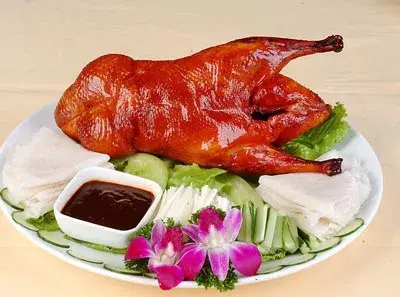
Dinner: Tonight the spectacular Peking duck banquet at Qianmen Quanjude Beijing Duck Restaurant- the most famous Beijing duck restaurant in the world. With a history of 137 years, it will give you an enthusiastic welcome.
Day 2 Beijing (B, L, D)
Day 1 Arrival Beijing (D)
Transfer via: Flight on your own arrangement
Upon your arrival you will be greeted by our local guide and then transferred to your hotel by a private air-conditioned car. For the rest of the day you will enjoy some leisure time.
Dinner: Tonight the spectacular Peking duck banquet at Qianmen Quanjude Beijing Duck Restaurant- the most famous Beijing duck restaurant in the world. With a history of 137 years, it will give you an enthusiastic welcome.
Day 2 Beijing (B, L, D)
Sightseeing: Temple of Heaven, Tiananmen Square, Forbidden City
This morning our tour will begin with a visit of the Temple of Heaven, which was completed in 1420, and expanded over the years by two Qing Dynasty Emperors. It was the place where the Emperor came every winter solstice to worship heaven and to solemnly pray for a good harvest. With the three blue-tiled cone-shaped roofs, a unique wooden and blue-tiled structure built without a nail, it has become a worldwide symbol of Beijing.
After lunch, we will go on our city tour to visit Tiananmen Square, the symbolical heart of China and gathering place for the masses. It is the biggest public square in the world, which can hold one million people.
From here we will walk across the Golden River Bridge to visit the Forbidden City and experience the ancient Emperor's daily life. For 5 centuries Chinese emperors carried out their administration here. With almost 10,000 rooms, it was the centre of the Ming and Qing dynasties, a massive complex of palaces, pavilions, courtyards and gardens where 24 emperors used to live. Forbidden City was the largest palace in the world, and in the past it was indeed a forbidden place for commoners. Your tour here will include private access to the Emperor's palace.
Dinner: Fujian cuisine
Fujian cuisine is noted for its light touch, sweet and sour flavor. The cooking puts great attention in choosing the choicest ingredients, and is thus particularly apt in preparing seafood dishes. The dishes mostly marinated in wine, are souring sweet, specialize in all kinds of seafood, stir-fired, quick-fried and shallow oil-fried; simmered, with stress on flavor soup.
Restaurant: BaMinShiFu
Tel: 86-010- 64428833-5855
Address: No. 11, 3section AnZhenXiLi Chaoyang District, Beijing
Day 3 Beijing (B, L, D)
Sightseeing: Badaling Great Wall, Ming Tombs, Sacred Way
After experiencing the royal lifestyle, today we will be transferred to the surrounding countryside of Beijing and visit the Badaling Great Wall, the pride of China and one of the Seven Wonders of the World. Whereas Genghis Khan contemplated it as a military obstacle, Richard Nixon described it as one of humankind's greatest achievements. You will be able to climb and walk one of the best preserved sections of the 2,000 years old ancient wall, admiring the splendid mountain views. Bring a jacket and layer- although it is breezy, the climbing is tough. So be in a good shape!
In the afternoon we will visit the legendary Ming Tombs, which are situated at the foot of Heavenly Longevity Mountain, Changping, northwest of Beijing. Since there are 13 Ming emperors buried there, this place was called the 13 Ming Tombs. You will walk along the Sacred Way, a road guarded by stone statues on both sides, as the ancient emperors did to hold a memorial ceremony for their ancestors. In addition, you will encounter the marble tombs of the Ming Dynasty emperors.
On the way back to hotel, you will be driven to visit the main 2008 Beijing Olympic venues, take an exterior visit of both the, Beijing National Stadium (Bird's Nest/Olympic Stadium), National Swimming Centre('The Water Cube'),feel free to take some photos of the stadiums.
Dinner: Anhui cuisine
Anhui cuisine follows strict rules in the use of heat and salt; stewed in brown sauce with stress on heavy oil and sauce.
Restaurant: Huangshan Hui Restaurant
Tel: 86- 010-63031467
Address: TianQiaoLiuXue Road ChongWen District, Beijing
Day 4 Beijing / Shanghai (B, L, D)
Transfer via: Flight on our arrangement
Sightseeing: Hutongs, Summer Palace
We will experience a unique Hutong tour by taking a rickshaw this morning. Hutongs are a kind of ancient city alley or lane and are very typical for Beijing. Most of them can be found close to the Forbidden City, and many were built during the three dynasties of Yuan, Ming and Qing. Today, the Hutong is a living museum of Beijing history showing the traditional lifestyle of Beijing people.
We will continue by visiting the Summer Palace. Equally famous as the Forbidden City, the Summer Palace is called 'Yiheyuan' (Garden of Nurtured Harmony) in Chinese. Until nowadays, it is the best preserved and the largest imperial garden in China. You will regret it if you leave Beijing without having visited this grand imperial garden.
Then you will take the flight to Shanghai. Arriving in Shanghai, you will be met and transferred to your hotel by our local guide. Together, you will take a walk to the famous Nanjing Road and the Bund. They are among the most recognizable architectural symbols of Shanghai and therefore a must-see when visiting Shanghai.
Dinner: Zhejiang cuisine
Zhejiang food is represented by Hangzhou, Ningbo, and Shaoxing styles. Zhejiang cuisine is tender, mild and fresh.
Restaurant: FeiHuangRenWen Restaurant
Tel: 86- 021-63249533
Address: No.330 Tiantong Road Hongkou District, Shanghai
Day 5 Shanghai (B, L, D)
Sightseeing: Shanghai Museum, Jade Buddha Temple, Oriental Pearl Tower, Yuyuan Garden
Today we will start the day with a visit of Shanghai Museum which is the biggest museum of China. It incorporates a collection of over 120,000 pieces of Chinese art & cultural relics and is especially famous for its treasures of bronzes, ceramics, paintings and calligraphy.
Then we head to the Jade Buddha Temple. The old-time and classical architectural style makes the temple unique and inimitable in this modern city. Both, the Sitting Buddha and the Recumbent Buddha are carved with whole white jade. If you're lucky, you can watch the monks serving a ceremony in a side room.
After lunch, we will visit the Oriental Pearl Tower, the highest TV Tower in Asia, which creates a picture of 'twin dragons playing with pearls'. The entire scene is a photographic jewel that excites the imagination and attracts thousands of visitors all year-round.
Then we will take a relaxing walk to the lovely Yuyuan Garden, a beautiful garden in the south of the Yangtze River. Wandering through it, you will find pavilions, corridors, streams, courtyards as well as many other natural features.
Dinner: Shandong cuisine
Shandong food consists of Jinan and Fushan food. Jinan food makes good use of soup seasoning, frying in deep oil and steaming. Shandong roast chicken is especially good with wine and the chicken is and tender. Tasting it is guaranteed to make the diner believe. Shandong cuisine is known for its light seasoning, qualities of freshness, clear colors and delicate fragrance and pure tastes.
Restaurant: Luwei Restaurant
Tel: 86-021-63738270
Address: No.18 Yunnan Nan Road Huangpu District, Shanghai
Day 6 Shanghai / Suzhou (B, L, D)
Transfer via: soft seat train arranged by us
Sightseeing: Humble Administrator's Garden, Zhouzhuang.
In the morning we'll depart from your hotel and take the express train to Suzhou. Suzhou is praised as the "Oriental Venice" and called 'paradise on earth' along with Hangzhou.
Upon your arrival in Suzhou, our guide will meet you and escort you to a local restaurant for lunch. Then you will visit the Humble Administrator's Garden, the largest classical garden in Suzhou and one of the four most famous ones in China. Originally built in 1513 AD, the garden consists of three parts with different types buildings around streams and ponds.
We will spend the afternoon in Zhouzhuang, one of the most famous water townships in China. Situated in Kunshan City, which is only 30 kilometers (18 miles) southeast of Suzhou, it is noted for its profound cultural background, the well preserved ancient residential houses, the elegant watery views and the strong local colored traditions and customs. Let us explore this town with a history of more than 2500 years and get to know about the architecture, lifestyle and inhabitants there.
Afterwards you will be transferred back to Suzhou to spend the rest of your day on your own.
Dinner: Jiangsu cuisine
The origin of Jiangsu cuisine can be traced to pre-Christian times. Jiangsu cuisine specialties are lightly flavored, whether they combine sweet-and-salty tastes. Soya sauce and spices are mild and used sparingly, although the use of rich-flavored broth is extensive.
Restaurant: BaoFangYuan Restaurant
Tel: 86- 0512-67206597
Address: No. 207 Pishi Street Pinjiang District Suzhou.
Day 7 Suzhou / Hangzhou (B, L, D)
Transfer via: soft seat train arranged by us
Sightseeing: West Lake, Meijiawu Tea Plantation
Our guide and driver will escort you from Hotel to train station (Suzhou). Upon your arrival in Hangzhou, our local guide will meet you and escort you to beautiful West Lake. We will take a cruise boat across the lake to see the 3 pagodas in the lake. The West Lake is the most famous tourist spot of Hangzhou. Graceful mountains surround it on three sides. It has a charming scenery and many cultural relics and historic sites. Then you will visit the Meijiawu Tea Plantation. Tea village is seated at the hinterland of West Lake Park and it is famous for its tea production. Everybody will feel relax in such a natural environment; enjoy the special tea culture and the beauty there.
Dinner:Hunan cuisine
Hunan cuisine takes curing, simmering, steaming and stewing as the main cooking methods. It is fragrant and fresh, sour and peppery, yet soft and tender.
Restaurant: DingXianFang Restaurant
Tel: 0571-87823878
Address: No.456 Qingtai Road Shangcheng district, Hangzhou.
Day 8 Hangzhou (B, L, D)
Sightseeing: Six Harmonies Pagoda, Lingyin Temple and Feilai Feng (also named Ling JiuFeng)
Today you will also visit Lingyin Temple including the Feilai Feng. The Feilai Feng is situated in the east of Ling Yin Temple. Isolated from others, its stone quality is totally different from that of surrounding mountain groups. It is 167 meters high, on the peak there are many grotesque stones in the shapes of charming dragon, prostrate tiger, walking elephant and scared ape. The main hall of Lingyin Temple is about 34 meters (111 feet) tall - incredibly high for a one-storey building. In the center of the hall you'll find the statue of Sakyamuni Buddha, which was carved from 24 pieces of camphor wood. The temple was named Lingyin Temple for its extremely beautiful environment which is serene and suitable for "Soul's Retreat".
After that, we will drive to the Six Harmonies Pagoda, highly erected next to Qiantang River and in the south of the West Lake. It is a perfect example of brick-and-wood structure built in ancient China and was built in 970 AD in the Northern Song dynasty (960-1127) to press down the evil of the river tidal bore in Qiantang River.
After lunch, our guide and driver will escort you to the bus station (Hangzhou), upon your arrival in Huangshan; our local guide will meet you and escort you to hotel by a private air-conditioned car. Then you will spend the rest of day on your leisure.
Dinner: Sichuan cuisine
Distinct features of Sichuan style: they prefer steaming, simmering, and smoking. The cooking is elaborate and meticulous and the flavoring highly varied and mixed. The taste of each dish is very distinct. A common Chinese saying about Sichuan cuisine is that each meal has its own unique taste, and no two dishes have the same flavor. Sichuan cuisine is world-famous for its diverse hot and spicy flavor.
Restaurant: ChuanLiuBuXi Restaurant
Tel: 86-0571-86069777 87172577
Address: No.246 Jiefang Road Shangcheng District, Hangzhou
Day 9 Hangzhou-Guangzhou (B, L, D)
Transfer via: Flight on our arrangement
Sightseeing: Sun Yat-sen Memorial Hall, Ancestral Temple of the Chen Family
Upon your arrival at the airport you will be met by your local guide. Then you will start your sightseeing tour by visiting Sun Yat-sen Memorial Hall. It is a magnificent building in the shape of octagon and an important place for large scale meeting and performance. Sun Yat-sen Memorial Hall was built in order to commemorate the contributions of Sun Zhongshan, the great predecessor of Chinese revolution for democracy. It is a memorial construction donated by the people in Guangzhou and the overseas Chinese and is listed as one of the first class cultural relics in Guangdong Province.
Afterwards you will visit the Ancestral Temple of the Chen Family which is also called Chen Clan Academy. It is a place both for offering up sacrifices to ancestors and for study. Now the Chen Clan Ancestral Temple in Guangzhou City, the Ancestors' Temple in Foshan City, the former Residence of Sun Yat-sen in Zhongshan City and the Opium War Memorial Hall in Dongguan City are regarded as the four major cultural tourist sites in Guangdong Province.
Dinner: Guangdong cuisine
In preparing the Guangdong cuisine, dozens of varieties of ingredients are often involved and more than 30 different kinds of cooking methods such as frying, grilling, stewing, simmering, deep-frying, roasting, and braising, etc. Freshness is everything to the Guangdong cuisine.
Restaurant: ALiuShiJia Restaurant
Tel: 86- 020-83516761
Address: No.302 Huanshizhong Road Yuexiu District, Guangzhou.
Day 10 Guangzhou (B, L)
Sightseeing: Yuexiu Park, Temple of Six Banyan Trees, Western Han Nanyue King Tomb Museum
In the morning we will start off to Yuexiu Park, the biggest comprehensive sight-seeing park. Yuexiu Park consists of seven hummocks and three artificial lakes. Yuexiu Park is well-known for beautiful hills and waters and plenty of antiques which you can enjoy at ease in the park. There are verdant grasses and trees, birds' singing, and fragrant flowers all through the year. Travelers will lose themselves in the elaborately engraved and Lingnan-styled pavilions, platforms, towers, and corridors; and the rippling water of the lakes.
Then you will head to the Temple of Six Banyan Trees. It has a long history in Guangzhou and is an ancient monastery famous at home and abroad. There are majestic towers, dense trees, plenty of antiques and valuable heritage from those famous people in the history. It is one of the four Buddhism temple complexes in Guangzhou is an important unit for the preservation of antiques.
Finally you will visit Western Han Nanyue King Tomb Museum, which is the oldest and largest Han tomb with the most funerary objects in Lingnan (South of the Nanling Mountain) Area. As one of the 80 famous museums in the world, the museum covers 14,000 square meters (150, 699.6 square feet) with 10 exhibition halls.
In the evening you will be transferred to the airport to take your flight to the next destination.
$300 Per Day
Shicha Hai
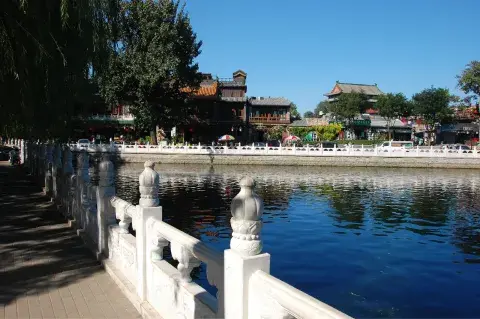
Shichahai is a famous scenic area that includes three lakes (Qian Hai, meaning Front Sea; Hou Hai, meaning Back Sea and Xi Hai, meaning Western Sea), surrounding places of historic interest and scenic beauty, and remnants of old-style Beijing residences, Hutong and Courtyard. It is located in the northwest part of Beijing, and covers a large area of 146.7 hectares (about 363 acres). We can take a walk along the lake and have a cup of hot coffee after some strolling.
...Read moreShichahai is a famous scenic area that includes three lakes (Qian Hai, meaning Front Sea; Hou Hai, meaning Back Sea and Xi Hai, meaning Western Sea), surrounding places of historic interest and scenic beauty, and remnants of old-style Beijing residences, Hutong and Courtyard. It is located in the northwest part of Beijing, and covers a large area of 146.7 hectares (about 363 acres). We can take a walk along the lake and have a cup of hot coffee after some strolling.
The greatest point of interest in Shichahai today is its residences, Hutong and Courtyard. In and around Beijing City, Shichahai is one of the best places to view well-preserved Hutongs and courtyards.
Hope you can enjoy!!
$200 Per Day
Private Beijing Antique Shopping Tour with Lunch
Start your private tour with pickup from your central Beijing hotel, and meet your private guide.
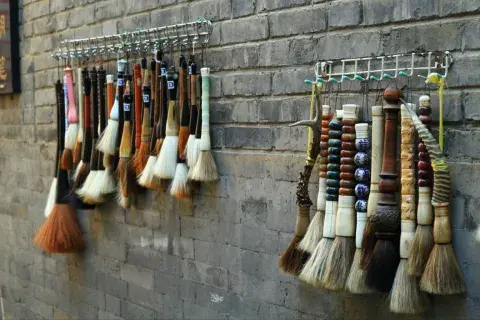
Hop inside your private, climate-controlled vehicle and travel to your first stop: Liulichang Antique Street. Situated in old Beijing, this history-steeped street is lined with stone shop-houses selling antique books, handicrafts, paintings, rubbings, glazed pottery, and other treasures.
Hear about Liulichang’s history, and get advice from your guide as to the best shopping opportunities....Read more
Start your private tour with pickup from your central Beijing hotel, and meet your private guide.
Hop inside your private, climate-controlled vehicle and travel to your first stop: Liulichang Antique Street. Situated in old Beijing, this history-steeped street is lined with stone shop-houses selling antique books, handicrafts, paintings, rubbings, glazed pottery, and other treasures.
Hear about Liulichang’s history, and get advice from your guide as to the best shopping opportunities. Sift through the traditional shops and stands, and explore the side lanes (hutongs), where the shops still bear original Ming and Qing architectural features like ornately carved doors and upswept roofs.
Next, drive to Panjiayuan Market, a so-called ‘weekend market’ that’s open daily. Weave through the throng of stands, perusing the huge array of antiques, curios, ceramics, Tibetan rugs, calligraphy, and other finds.
After shopping here, refuel with lunch at a Chinese restaurant, and continue to Baoguosi Cultural Market, set around an old temple. Scour the courtyards of vendors hawking stamps, books, coins and jade, and get tips on scouting out and clinching the best deals from your guide.
If time allows, squeeze in a visit to Hongqiao Market, a mall known for its pearl traders, and electronics, art, clothes, and accessories shops. Trawl for bargains, and haggle over pearls and other precious gems as perfect keepsakes of your time in Beijing.
After seven hours, your tour concludes with a hotel drop-off.