Beijing Attractions
Friends Cafe
Central Perk, the fictional coffee shop where the characters of Friends spent almost all their time, has finally opened in real life. A near-identical replica of the iconic '90s hangout has opened in a Beijing apartment complex, run by a Friends super fan named Du Xin—who actually prefers to go b...
Central Perk, the fictional coffee shop where the characters of Friends spent almost all their time, has finally opened in real life. A near-identical replica of the iconic '90s hangout has opened in a Beijing apartment complex, run by a Friends super fan named Du Xin—who actually prefers to go by "Gunther." Obviously, Du is really, really into Friends, claiming, “For me, it’s like a religion. It’s my life.”
That intense devotion to Friends is apparent from the detail Du put into his Central Perk, which has the same window and doorway as the “real” coffee shop, as well as that couch. Furthermore, the menu only features snack items mentioned on the show, complete with annotations that explain exactly when that cupcake appeared in an episode. Du has even constructed a replica of Joey and Chandler’s apartment next door to Central Park, featuring a foosball table, Baywatch DVDs, and the giant TV cabinet Joey built.
Du traces his love of Friends, as well as its massive popularity in China, to the “living way” of the characters, who spent all their time just hanging out with their best friends. So what do Friends devotees who flock to Du’s Central Perk do while similarly just hanging out? Watch Friends reruns, of course.
Storygarden Café
Seen from the outside, this seems like an odd collection of café meets library meets trinket sale. Somehow it all comes together to be a quirky little place that serves some great lattes. Known for its Saturday coffee schools, Peka Kucha-like salon offerings and Beta Camps, this is the not-so-sec...
Seen from the outside, this seems like an odd collection of café meets library meets trinket sale. Somehow it all comes together to be a quirky little place that serves some great lattes. Known for its Saturday coffee schools, Peka Kucha-like salon offerings and Beta Camps, this is the not-so-secret hangout of a lot of Beijing’s young social media crowds. Imagine social justice meets the Internet for a cup of coffee, fun staff and great cast of local characters. Your journey to Storygarden Café will surely be an incrediable experience. So, bring your laptop get yourselves in such a fun café. Indoor and outdoor seats are both available at the café.


Hollys Coffee
Located in SOHO Shangdu, Hollys Coffee is the latest addition to an area that already has Starbucks, Costa, Pacific and Esquires all within spitting distance of each other. In the competitive area, Hollys Coffee doesn’t follow others to serve up only coffee fares, and it has a much sweeter idea i...
Located in SOHO Shangdu, Hollys Coffee is the latest addition to an area that already has Starbucks, Costa, Pacific and Esquires all within spitting distance of each other. In the competitive area, Hollys Coffee doesn’t follow others to serve up only coffee fares, and it has a much sweeter idea in mind. A half dozen Frappachino-styled beverages and caramel/whip cream concoctions are also included on the menu.
Holly's also does sandwiches and Belgian waffles. Feel like getting one's hands dirty? Purchase one of the coffee shop's signature snowballs. The snowballs are giant cookie balls glazed in either chocolate, vanilla or strawberry. Take one of the wooden mallets and "Hulk smash" those balls into a thousand bite-sized pieces of enjoyment. Amidst a cluttered mix of coffee shops, Hollys manages to distinguish itself.
The Temple of Confucius
Located on Guozijian Street inside Anding Gate, the Temple of Confucius in Beijing is the place where people paid homage to Confucius during the Yuan Dynasty (1271-1368), Ming Dynasty (1368-1644) and Qing Dynasty (1644-1911).
The Temple of Confucius was initially built in 1302 and ad...
Located on Guozijian Street inside Anding Gate, the Temple of Confucius in Beijing is the place where people paid homage to Confucius during the Yuan Dynasty (1271-1368), Ming Dynasty (1368-1644) and Qing Dynasty (1644-1911).
The Temple of Confucius was initially built in 1302 and additions were made during the Ming and Qing dynasties. It has a total area of 22,000 square meters (5.4 acres). It is the second largest temple constructed for Confucius, the greatest thinker and educationalist in ancient China, ranking only behind the Temple of Confucius in Qufu, Shandong Province.
This temple consists of four courtyards. The main structures include Xianshi Gate (Gate of the First Teacher), Dacheng Gate (Gate of Great Accomplishment), Dacheng Hall (Hall of Great Accomplishment) and Chongshengci (Worship Hall). Dacheng Hall is the main building in the temple, where the memorial ceremony for Confucius was often held. Inside the temple one can see that 198 stone tablets are positioned on either side of the front courtyard, containing 51,624 names of Jinshi (the advanced scholars) of the Yuan, Ming and Qing dynasties. Also 14 stone stele pavilions of the Ming and Qing dynasties hold the precious historical information of ancient China.
Featured Attractions: In the temple, you can also find remarkable pictures like two flying dragons playing a pearl among clouds, which are believed to be used only in the imperial palaces because dragon stands for emperor in ancient China. From those, it is easy to imagine the importance of the Confucius Temple in the feudal society of China.
Subway Line 2 or 5: get off at Yonghegong Station, and get out of the station from Exit D (Southwest Exit).
Badaling Remnant Great Wall
The Badaling Remnant Great Wall is located in Donggou Village, Badaling Town of Yanqing District. It is about 65 kilometers (40 miles) from Beijing. This section of the Great Wall is about 5 kilometers (3 miles) from the famous Badaling stretch, and is nearby the western gate of the military defe...
The Badaling Remnant Great Wall is located in Donggou Village, Badaling Town of Yanqing District. It is about 65 kilometers (40 miles) from Beijing. This section of the Great Wall is about 5 kilometers (3 miles) from the famous Badaling stretch, and is nearby the western gate of the military defense system on the Badaling Great Wall. Seen from a distance, the Badaling Remnant Great Wall resembles a dragon winding its way along the mountain peaks. With lofty ridges and towering mountains, the deep trenches and high embankments all contribute to the fortification of this strategically crucial section of the Great Wall. Surviving the vicissitudes of nearly 2,000 years, the walls dominate the scene with an indelible mark made by history. The remnant wall, with its ubiquitous broken body, conveys a peculiar glamour. This section of the Great Wall is in its original form, and exemplifies the character of the Ming Dynasty’s Great Wall. The whole section is 2,000 meters long, but only about 100 meters are open to tourists. Two routes are easily accessible to tourists that plan to enjoy the splendid panorama of the Great Wall at their leisure.
Featured Attractions: The tourist line starts from the watch tower at the opening of the remnant Great Wall, and stretches upwards along the mountains. Tourists can see the damaged walls, collapsed openings, and broken towers. To facilitate the tourists, there are wooden steps and handrails to ensure the safety of tourists. According to the research by experts, there are two ancient sites of great archaeological significance. One is the stone material field where stones were taken to build the Great Wall. There are still huge stones with clear signs of cutting; another place is the brick kiln which was used to produce the Great Wall’s bricks.
Beijing Articles
Reasons Apple Cider Vinegar Works for Losing WeightⅤ
5. It Lowers Cholesterol
...5. It Lowers Cholesterol
Apple cider vinegar provides other benefits that may help you keep your motivation up while dieting. One is that it reduces bad LDL cholesterol and raises good HDL cholesterol at the same time. It has also been shown to improve dangerous triglyceride levels. Studies in both healthy and diabetic rats and mice have made this conclusion.
People who are overweight do have an increased risk of high cholesterol, though it strikes people of normal weight, too. Anyone who wants better health should consider an apple cider vinegar regimen, but people who are actively trying to lose weight will be glad to know that they are killing several birds with one stone.
Reasons Apple Cider Vinegar Works for Losing WeightⅣ
Once again, it is the acetic acid in apple cider vinegar that researchers think is responsible for higher metabolic rates. Most studies on ACV and metabolism have been on rats, but the results are interesting.
...Once again, it is the acetic acid in apple cider vinegar that researchers think is responsible for higher metabolic rates. Most studies on ACV and metabolism have been on rats, but the results are interesting.
Rats who took acetic acid in the course of these studies had a higher production of the enzyme AMPK. Humans also produce AMPK to burn fat as well as limit development of fat and sugar in their livers.
4. It Makes Food Safer
When you’re on a diet, chances are you’ll be adding a lot of chicken, seafood, and fresh produce to your diet. Unfortunately, these foods all top the list of the most recalled food products.
They may be easily contaminated with food borne germs such as salmonella, listeria, or E. coli. We all know that once you’ve been made sick by a particular food, your willingness to eat it again goes way down.
Apple cider vinegar can kill the bacteria that cause food poisoning. Certain studies have shown that vinegar may reduce the level of bacteria on food by 90% and eliminate 95% of some viruses. Of course, you still need to observe food recalls and to wash all produce carefully. Remember, throwing up for days may make you skinnier, but it won’t make you healthier, and that’s really what you’re going for.
Reasons Apple Cider Vinegar Works for Losing WeightⅡ
1. It Burns Fat And Reduces Stored Fat
...1. It Burns Fat And Reduces Stored Fat
For one thing, acetic acid helps you burn fat. But even better, it actually reduces the body’s tendency to store fat at all. In rat and mouse studies, acetic acid was found to activate the genes that reduce belly and liver fat storage. Further studies in humans have supported this result.
One human study out of Japan found that participants who ingested either one or two tablespoons of apple cider vinegar every day all lost weight as well as had a reduction in body fat percentage, waist circumference, and triglyceride levels.
The participants who were given two tablespoons fared better than those who took just one, while those on a placebo were found to have gained a few pounds on average.
Top Beijing Tours
$300 Per Day
10 Days Cuisine Feast Tour with All the Major China Cuisines
Day 1 Arrival Beijing (D)
Transfer via: Flight on your own arrangement
Upon your arrival you will be greeted by our local guide and then transferred to your hotel by a private air-conditioned car. For the rest of the day you will enjoy some leisure time.
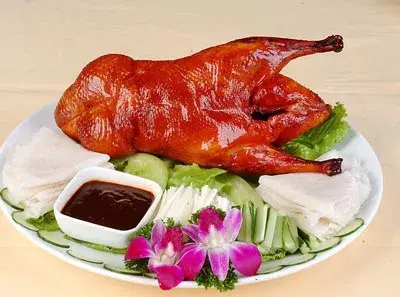
Dinner: Tonight the spectacular Peking duck banquet at Qianmen Quanjude Beijing Duck Restaurant- the most famous Beijing duck restaurant in the world. With a history of 137 years, it will give you an enthusiastic welcome.
Day 2 Beijing (B, L, D)
Day 1 Arrival Beijing (D)
Transfer via: Flight on your own arrangement
Upon your arrival you will be greeted by our local guide and then transferred to your hotel by a private air-conditioned car. For the rest of the day you will enjoy some leisure time.
Dinner: Tonight the spectacular Peking duck banquet at Qianmen Quanjude Beijing Duck Restaurant- the most famous Beijing duck restaurant in the world. With a history of 137 years, it will give you an enthusiastic welcome.
Day 2 Beijing (B, L, D)
Sightseeing: Temple of Heaven, Tiananmen Square, Forbidden City
This morning our tour will begin with a visit of the Temple of Heaven, which was completed in 1420, and expanded over the years by two Qing Dynasty Emperors. It was the place where the Emperor came every winter solstice to worship heaven and to solemnly pray for a good harvest. With the three blue-tiled cone-shaped roofs, a unique wooden and blue-tiled structure built without a nail, it has become a worldwide symbol of Beijing.
After lunch, we will go on our city tour to visit Tiananmen Square, the symbolical heart of China and gathering place for the masses. It is the biggest public square in the world, which can hold one million people.
From here we will walk across the Golden River Bridge to visit the Forbidden City and experience the ancient Emperor's daily life. For 5 centuries Chinese emperors carried out their administration here. With almost 10,000 rooms, it was the centre of the Ming and Qing dynasties, a massive complex of palaces, pavilions, courtyards and gardens where 24 emperors used to live. Forbidden City was the largest palace in the world, and in the past it was indeed a forbidden place for commoners. Your tour here will include private access to the Emperor's palace.
Dinner: Fujian cuisine
Fujian cuisine is noted for its light touch, sweet and sour flavor. The cooking puts great attention in choosing the choicest ingredients, and is thus particularly apt in preparing seafood dishes. The dishes mostly marinated in wine, are souring sweet, specialize in all kinds of seafood, stir-fired, quick-fried and shallow oil-fried; simmered, with stress on flavor soup.
Restaurant: BaMinShiFu
Tel: 86-010- 64428833-5855
Address: No. 11, 3section AnZhenXiLi Chaoyang District, Beijing
Day 3 Beijing (B, L, D)
Sightseeing: Badaling Great Wall, Ming Tombs, Sacred Way
After experiencing the royal lifestyle, today we will be transferred to the surrounding countryside of Beijing and visit the Badaling Great Wall, the pride of China and one of the Seven Wonders of the World. Whereas Genghis Khan contemplated it as a military obstacle, Richard Nixon described it as one of humankind's greatest achievements. You will be able to climb and walk one of the best preserved sections of the 2,000 years old ancient wall, admiring the splendid mountain views. Bring a jacket and layer- although it is breezy, the climbing is tough. So be in a good shape!
In the afternoon we will visit the legendary Ming Tombs, which are situated at the foot of Heavenly Longevity Mountain, Changping, northwest of Beijing. Since there are 13 Ming emperors buried there, this place was called the 13 Ming Tombs. You will walk along the Sacred Way, a road guarded by stone statues on both sides, as the ancient emperors did to hold a memorial ceremony for their ancestors. In addition, you will encounter the marble tombs of the Ming Dynasty emperors.
On the way back to hotel, you will be driven to visit the main 2008 Beijing Olympic venues, take an exterior visit of both the, Beijing National Stadium (Bird's Nest/Olympic Stadium), National Swimming Centre('The Water Cube'),feel free to take some photos of the stadiums.
Dinner: Anhui cuisine
Anhui cuisine follows strict rules in the use of heat and salt; stewed in brown sauce with stress on heavy oil and sauce.
Restaurant: Huangshan Hui Restaurant
Tel: 86- 010-63031467
Address: TianQiaoLiuXue Road ChongWen District, Beijing
Day 4 Beijing / Shanghai (B, L, D)
Transfer via: Flight on our arrangement
Sightseeing: Hutongs, Summer Palace
We will experience a unique Hutong tour by taking a rickshaw this morning. Hutongs are a kind of ancient city alley or lane and are very typical for Beijing. Most of them can be found close to the Forbidden City, and many were built during the three dynasties of Yuan, Ming and Qing. Today, the Hutong is a living museum of Beijing history showing the traditional lifestyle of Beijing people.
We will continue by visiting the Summer Palace. Equally famous as the Forbidden City, the Summer Palace is called 'Yiheyuan' (Garden of Nurtured Harmony) in Chinese. Until nowadays, it is the best preserved and the largest imperial garden in China. You will regret it if you leave Beijing without having visited this grand imperial garden.
Then you will take the flight to Shanghai. Arriving in Shanghai, you will be met and transferred to your hotel by our local guide. Together, you will take a walk to the famous Nanjing Road and the Bund. They are among the most recognizable architectural symbols of Shanghai and therefore a must-see when visiting Shanghai.
Dinner: Zhejiang cuisine
Zhejiang food is represented by Hangzhou, Ningbo, and Shaoxing styles. Zhejiang cuisine is tender, mild and fresh.
Restaurant: FeiHuangRenWen Restaurant
Tel: 86- 021-63249533
Address: No.330 Tiantong Road Hongkou District, Shanghai
Day 5 Shanghai (B, L, D)
Sightseeing: Shanghai Museum, Jade Buddha Temple, Oriental Pearl Tower, Yuyuan Garden
Today we will start the day with a visit of Shanghai Museum which is the biggest museum of China. It incorporates a collection of over 120,000 pieces of Chinese art & cultural relics and is especially famous for its treasures of bronzes, ceramics, paintings and calligraphy.
Then we head to the Jade Buddha Temple. The old-time and classical architectural style makes the temple unique and inimitable in this modern city. Both, the Sitting Buddha and the Recumbent Buddha are carved with whole white jade. If you're lucky, you can watch the monks serving a ceremony in a side room.
After lunch, we will visit the Oriental Pearl Tower, the highest TV Tower in Asia, which creates a picture of 'twin dragons playing with pearls'. The entire scene is a photographic jewel that excites the imagination and attracts thousands of visitors all year-round.
Then we will take a relaxing walk to the lovely Yuyuan Garden, a beautiful garden in the south of the Yangtze River. Wandering through it, you will find pavilions, corridors, streams, courtyards as well as many other natural features.
Dinner: Shandong cuisine
Shandong food consists of Jinan and Fushan food. Jinan food makes good use of soup seasoning, frying in deep oil and steaming. Shandong roast chicken is especially good with wine and the chicken is and tender. Tasting it is guaranteed to make the diner believe. Shandong cuisine is known for its light seasoning, qualities of freshness, clear colors and delicate fragrance and pure tastes.
Restaurant: Luwei Restaurant
Tel: 86-021-63738270
Address: No.18 Yunnan Nan Road Huangpu District, Shanghai
Day 6 Shanghai / Suzhou (B, L, D)
Transfer via: soft seat train arranged by us
Sightseeing: Humble Administrator's Garden, Zhouzhuang.
In the morning we'll depart from your hotel and take the express train to Suzhou. Suzhou is praised as the "Oriental Venice" and called 'paradise on earth' along with Hangzhou.
Upon your arrival in Suzhou, our guide will meet you and escort you to a local restaurant for lunch. Then you will visit the Humble Administrator's Garden, the largest classical garden in Suzhou and one of the four most famous ones in China. Originally built in 1513 AD, the garden consists of three parts with different types buildings around streams and ponds.
We will spend the afternoon in Zhouzhuang, one of the most famous water townships in China. Situated in Kunshan City, which is only 30 kilometers (18 miles) southeast of Suzhou, it is noted for its profound cultural background, the well preserved ancient residential houses, the elegant watery views and the strong local colored traditions and customs. Let us explore this town with a history of more than 2500 years and get to know about the architecture, lifestyle and inhabitants there.
Afterwards you will be transferred back to Suzhou to spend the rest of your day on your own.
Dinner: Jiangsu cuisine
The origin of Jiangsu cuisine can be traced to pre-Christian times. Jiangsu cuisine specialties are lightly flavored, whether they combine sweet-and-salty tastes. Soya sauce and spices are mild and used sparingly, although the use of rich-flavored broth is extensive.
Restaurant: BaoFangYuan Restaurant
Tel: 86- 0512-67206597
Address: No. 207 Pishi Street Pinjiang District Suzhou.
Day 7 Suzhou / Hangzhou (B, L, D)
Transfer via: soft seat train arranged by us
Sightseeing: West Lake, Meijiawu Tea Plantation
Our guide and driver will escort you from Hotel to train station (Suzhou). Upon your arrival in Hangzhou, our local guide will meet you and escort you to beautiful West Lake. We will take a cruise boat across the lake to see the 3 pagodas in the lake. The West Lake is the most famous tourist spot of Hangzhou. Graceful mountains surround it on three sides. It has a charming scenery and many cultural relics and historic sites. Then you will visit the Meijiawu Tea Plantation. Tea village is seated at the hinterland of West Lake Park and it is famous for its tea production. Everybody will feel relax in such a natural environment; enjoy the special tea culture and the beauty there.
Dinner:Hunan cuisine
Hunan cuisine takes curing, simmering, steaming and stewing as the main cooking methods. It is fragrant and fresh, sour and peppery, yet soft and tender.
Restaurant: DingXianFang Restaurant
Tel: 0571-87823878
Address: No.456 Qingtai Road Shangcheng district, Hangzhou.
Day 8 Hangzhou (B, L, D)
Sightseeing: Six Harmonies Pagoda, Lingyin Temple and Feilai Feng (also named Ling JiuFeng)
Today you will also visit Lingyin Temple including the Feilai Feng. The Feilai Feng is situated in the east of Ling Yin Temple. Isolated from others, its stone quality is totally different from that of surrounding mountain groups. It is 167 meters high, on the peak there are many grotesque stones in the shapes of charming dragon, prostrate tiger, walking elephant and scared ape. The main hall of Lingyin Temple is about 34 meters (111 feet) tall - incredibly high for a one-storey building. In the center of the hall you'll find the statue of Sakyamuni Buddha, which was carved from 24 pieces of camphor wood. The temple was named Lingyin Temple for its extremely beautiful environment which is serene and suitable for "Soul's Retreat".
After that, we will drive to the Six Harmonies Pagoda, highly erected next to Qiantang River and in the south of the West Lake. It is a perfect example of brick-and-wood structure built in ancient China and was built in 970 AD in the Northern Song dynasty (960-1127) to press down the evil of the river tidal bore in Qiantang River.
After lunch, our guide and driver will escort you to the bus station (Hangzhou), upon your arrival in Huangshan; our local guide will meet you and escort you to hotel by a private air-conditioned car. Then you will spend the rest of day on your leisure.
Dinner: Sichuan cuisine
Distinct features of Sichuan style: they prefer steaming, simmering, and smoking. The cooking is elaborate and meticulous and the flavoring highly varied and mixed. The taste of each dish is very distinct. A common Chinese saying about Sichuan cuisine is that each meal has its own unique taste, and no two dishes have the same flavor. Sichuan cuisine is world-famous for its diverse hot and spicy flavor.
Restaurant: ChuanLiuBuXi Restaurant
Tel: 86-0571-86069777 87172577
Address: No.246 Jiefang Road Shangcheng District, Hangzhou
Day 9 Hangzhou-Guangzhou (B, L, D)
Transfer via: Flight on our arrangement
Sightseeing: Sun Yat-sen Memorial Hall, Ancestral Temple of the Chen Family
Upon your arrival at the airport you will be met by your local guide. Then you will start your sightseeing tour by visiting Sun Yat-sen Memorial Hall. It is a magnificent building in the shape of octagon and an important place for large scale meeting and performance. Sun Yat-sen Memorial Hall was built in order to commemorate the contributions of Sun Zhongshan, the great predecessor of Chinese revolution for democracy. It is a memorial construction donated by the people in Guangzhou and the overseas Chinese and is listed as one of the first class cultural relics in Guangdong Province.
Afterwards you will visit the Ancestral Temple of the Chen Family which is also called Chen Clan Academy. It is a place both for offering up sacrifices to ancestors and for study. Now the Chen Clan Ancestral Temple in Guangzhou City, the Ancestors' Temple in Foshan City, the former Residence of Sun Yat-sen in Zhongshan City and the Opium War Memorial Hall in Dongguan City are regarded as the four major cultural tourist sites in Guangdong Province.
Dinner: Guangdong cuisine
In preparing the Guangdong cuisine, dozens of varieties of ingredients are often involved and more than 30 different kinds of cooking methods such as frying, grilling, stewing, simmering, deep-frying, roasting, and braising, etc. Freshness is everything to the Guangdong cuisine.
Restaurant: ALiuShiJia Restaurant
Tel: 86- 020-83516761
Address: No.302 Huanshizhong Road Yuexiu District, Guangzhou.
Day 10 Guangzhou (B, L)
Sightseeing: Yuexiu Park, Temple of Six Banyan Trees, Western Han Nanyue King Tomb Museum
In the morning we will start off to Yuexiu Park, the biggest comprehensive sight-seeing park. Yuexiu Park consists of seven hummocks and three artificial lakes. Yuexiu Park is well-known for beautiful hills and waters and plenty of antiques which you can enjoy at ease in the park. There are verdant grasses and trees, birds' singing, and fragrant flowers all through the year. Travelers will lose themselves in the elaborately engraved and Lingnan-styled pavilions, platforms, towers, and corridors; and the rippling water of the lakes.
Then you will head to the Temple of Six Banyan Trees. It has a long history in Guangzhou and is an ancient monastery famous at home and abroad. There are majestic towers, dense trees, plenty of antiques and valuable heritage from those famous people in the history. It is one of the four Buddhism temple complexes in Guangzhou is an important unit for the preservation of antiques.
Finally you will visit Western Han Nanyue King Tomb Museum, which is the oldest and largest Han tomb with the most funerary objects in Lingnan (South of the Nanling Mountain) Area. As one of the 80 famous museums in the world, the museum covers 14,000 square meters (150, 699.6 square feet) with 10 exhibition halls.
In the evening you will be transferred to the airport to take your flight to the next destination.
$300 Per Day
Shicha Hai
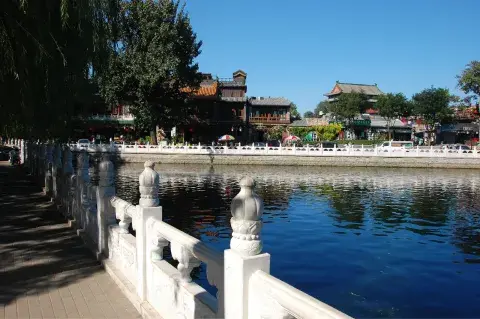
Shichahai is a famous scenic area that includes three lakes (Qian Hai, meaning Front Sea; Hou Hai, meaning Back Sea and Xi Hai, meaning Western Sea), surrounding places of historic interest and scenic beauty, and remnants of old-style Beijing residences, Hutong and Courtyard. It is located in the northwest part of Beijing, and covers a large area of 146.7 hectares (about 363 acres). We can take a walk along the lake and have a cup of hot coffee after some strolling.
...Read moreShichahai is a famous scenic area that includes three lakes (Qian Hai, meaning Front Sea; Hou Hai, meaning Back Sea and Xi Hai, meaning Western Sea), surrounding places of historic interest and scenic beauty, and remnants of old-style Beijing residences, Hutong and Courtyard. It is located in the northwest part of Beijing, and covers a large area of 146.7 hectares (about 363 acres). We can take a walk along the lake and have a cup of hot coffee after some strolling.
The greatest point of interest in Shichahai today is its residences, Hutong and Courtyard. In and around Beijing City, Shichahai is one of the best places to view well-preserved Hutongs and courtyards.
Hope you can enjoy!!
$200 Per Day
Private Beijing Antique Shopping Tour with Lunch
Start your private tour with pickup from your central Beijing hotel, and meet your private guide.
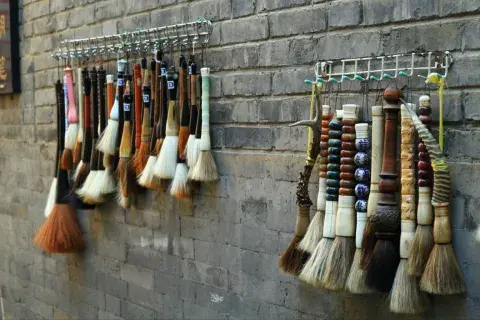
Hop inside your private, climate-controlled vehicle and travel to your first stop: Liulichang Antique Street. Situated in old Beijing, this history-steeped street is lined with stone shop-houses selling antique books, handicrafts, paintings, rubbings, glazed pottery, and other treasures.
Hear about Liulichang’s history, and get advice from your guide as to the best shopping opportunities....Read more
Start your private tour with pickup from your central Beijing hotel, and meet your private guide.
Hop inside your private, climate-controlled vehicle and travel to your first stop: Liulichang Antique Street. Situated in old Beijing, this history-steeped street is lined with stone shop-houses selling antique books, handicrafts, paintings, rubbings, glazed pottery, and other treasures.
Hear about Liulichang’s history, and get advice from your guide as to the best shopping opportunities. Sift through the traditional shops and stands, and explore the side lanes (hutongs), where the shops still bear original Ming and Qing architectural features like ornately carved doors and upswept roofs.
Next, drive to Panjiayuan Market, a so-called ‘weekend market’ that’s open daily. Weave through the throng of stands, perusing the huge array of antiques, curios, ceramics, Tibetan rugs, calligraphy, and other finds.
After shopping here, refuel with lunch at a Chinese restaurant, and continue to Baoguosi Cultural Market, set around an old temple. Scour the courtyards of vendors hawking stamps, books, coins and jade, and get tips on scouting out and clinching the best deals from your guide.
If time allows, squeeze in a visit to Hongqiao Market, a mall known for its pearl traders, and electronics, art, clothes, and accessories shops. Trawl for bargains, and haggle over pearls and other precious gems as perfect keepsakes of your time in Beijing.
After seven hours, your tour concludes with a hotel drop-off.