Beijing Attractions
Beijing Articles
Lugou BridgeⅡ
The 231.8 yard-long bridge used to be a key artery into Beijing crossing Yongding River which was moody, powerful and furious but today has dried up....
The 231.8 yard-long bridge used to be a key artery into Beijing crossing Yongding River which was moody, powerful and furious but today has dried up. First constructed in 1189 and completed in 1192, the bridge has gone through the usual cycle of rebuilding and restoration, and it received a major makeover in 1444. Although it succumbed to flood in 1698, it was restored to its former glory after the PRC was founded.
If you have spent enough time in China, you may have contracted the fatigue of Chinese sentry lions at gates. But try to imagine a bridge lined with hundreds of small stone lions. At Lugou Bridge, you will find yourself falling into an awestruck, gleeful trance before those distinctively carved out beasts. Offering an orgasmic viewing experience, your lion fatigue will wither away. Try counting the lions, but it is not as easy as it sounds. For centuries, no one has had the temerity to claim that he or she has counted them up. It is easy to get the 288 lions sitting atop stone poles, but do not forget babies clinging to adults.
Lugou BridgeⅠ
So many hullabaloos have been made about, and so much ink has been spilled over, Lugou Bridge that the 11-arch stone bridge seemingly has gobbled up almost all the hype among its ancient counterparts in Beijing....
So many hullabaloos have been made about, and so much ink has been spilled over, Lugou Bridge that the 11-arch stone bridge seemingly has gobbled up almost all the hype among its ancient counterparts in Beijing. It proudly proclaims itself 'the oldest and the most magnificent stone bridge in Beijing'. With its unique design and amazing aesthetics, the bridge left so firm an impression upon Marco Polo 7 centuries ago that he rhapsodized over it in glowing terms in his travelogue widely read in western countries.
Niujie Mosque Ⅲ
To the rear of the main hall is a group of small religious halls and stela pavilions designed in the Islamic style....
To the rear of the main hall is a group of small religious halls and stela pavilions designed in the Islamic style. Since the teaching of the Koran forbid the portrayal of human or animal forms, the designs and patterns in all of the decorations are composed of Arabic letters and geometrical patterns. In the center of this section is the minaret, from which the muezzin calls the faithful for prayers five times a day, beginning at dawn.
In the innermost courtyard of the compound are a number of auxiliary buildings, including classrooms for religious training. Especially, there is a very large bathhouse used for religious ablutions in the southern part of the compound.
The Niujie Mosque has undergone three renovations since the founding of the People's Republic of China in 1949, respectively in 1955, 1979 and 1996.
Entrance Fee: CNY 10
Opening Hours: 08:00 - 16:00
Bus Routes:
A. Take Bus No. 10, 48, 626 or 717 and get off at Niujie Mosque Station.
B. Take Bus No. 5, 6, 38, 57, 109 and get off at Niujie crossing west.
C. Take Bus No. 10, 48, 626, 717 and get off at Niujie crossing south.
Top Beijing Tours
$300 Per Day
Shicha Hai
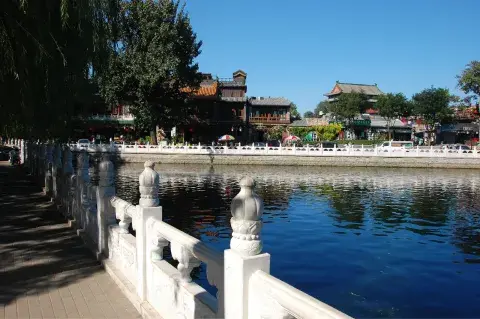
Shichahai is a famous scenic area that includes three lakes (Qian Hai, meaning Front Sea; Hou Hai, meaning Back Sea and Xi Hai, meaning Western Sea), surrounding places of historic interest and scenic beauty, and remnants of old-style Beijing residences, Hutong and Courtyard. It is located in the northwest part of Beijing, and covers a large area of 146.7 hectares (about 363 acres). We can take a walk along the lake and have a cup of hot coffee after some strolling.
...Read moreShichahai is a famous scenic area that includes three lakes (Qian Hai, meaning Front Sea; Hou Hai, meaning Back Sea and Xi Hai, meaning Western Sea), surrounding places of historic interest and scenic beauty, and remnants of old-style Beijing residences, Hutong and Courtyard. It is located in the northwest part of Beijing, and covers a large area of 146.7 hectares (about 363 acres). We can take a walk along the lake and have a cup of hot coffee after some strolling.
The greatest point of interest in Shichahai today is its residences, Hutong and Courtyard. In and around Beijing City, Shichahai is one of the best places to view well-preserved Hutongs and courtyards.
Hope you can enjoy!!
$200 Per Day
Private Beijing Antique Shopping Tour with Lunch
Start your private tour with pickup from your central Beijing hotel, and meet your private guide.
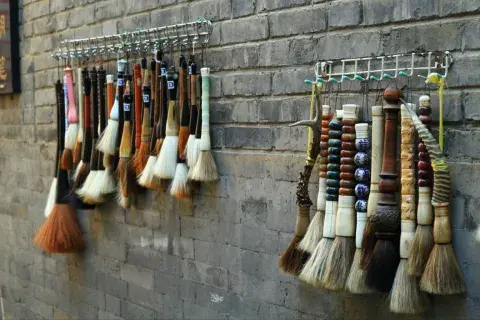
Hop inside your private, climate-controlled vehicle and travel to your first stop: Liulichang Antique Street. Situated in old Beijing, this history-steeped street is lined with stone shop-houses selling antique books, handicrafts, paintings, rubbings, glazed pottery, and other treasures.
Hear about Liulichang’s history, and get advice from your guide as to the best shopping opportunities....Read more
Start your private tour with pickup from your central Beijing hotel, and meet your private guide.
Hop inside your private, climate-controlled vehicle and travel to your first stop: Liulichang Antique Street. Situated in old Beijing, this history-steeped street is lined with stone shop-houses selling antique books, handicrafts, paintings, rubbings, glazed pottery, and other treasures.
Hear about Liulichang’s history, and get advice from your guide as to the best shopping opportunities. Sift through the traditional shops and stands, and explore the side lanes (hutongs), where the shops still bear original Ming and Qing architectural features like ornately carved doors and upswept roofs.
Next, drive to Panjiayuan Market, a so-called ‘weekend market’ that’s open daily. Weave through the throng of stands, perusing the huge array of antiques, curios, ceramics, Tibetan rugs, calligraphy, and other finds.
After shopping here, refuel with lunch at a Chinese restaurant, and continue to Baoguosi Cultural Market, set around an old temple. Scour the courtyards of vendors hawking stamps, books, coins and jade, and get tips on scouting out and clinching the best deals from your guide.
If time allows, squeeze in a visit to Hongqiao Market, a mall known for its pearl traders, and electronics, art, clothes, and accessories shops. Trawl for bargains, and haggle over pearls and other precious gems as perfect keepsakes of your time in Beijing.
After seven hours, your tour concludes with a hotel drop-off.