Wuhan Attractions

Mosques in Wuhan

Minquan Mosque is located at no. 146 Minquan Road in Hankou. Originally named Guangyi Bridge Mosque, it has also been known as Qingzhen Temple. Minquan Mosque has an area of 530 square meters. In 1930 the mosque was moved to its current location. It is a three storey brick bui...
Minquan Mosque is located at no. 146 Minquan Road in Hankou. Originally named Guangyi Bridge Mosque, it has also been known as Qingzhen Temple. Minquan Mosque has an area of 530 square meters. In 1930 the mosque was moved to its current location. It is a three storey brick building with a typical domed roof. The first floor is comprised of the parlor, the ablutions room, and the sacred relic room.  The second floor contains the scripture study room and preaching room, while the third floor is the bethel hall which can accommodate more than 300 persons.
 
In 1986 the building was expanded to 5 storeys (two new floors were added). Now the mosque has become the center of activity for the Wuhan Islamic community, as well as the bethel for foreign Muslim friends.
 
How to get there: Take bus No.1 to its terminus then walk 400 meters north. It is on the left hand side.
 
Another medium size mosque is located near the Wuchang railway station (also called Wuchang Mosque):
 
How to get there: Please catch a cab; it is much easier since there is no bus or any other means of transportation going in that direction. It is less than 7 minutes by taxis.

Churches in Hankou

Jiu Shi Church (武汉市救世堂)
# 475 Hanzheng Street (汉口汉正街475号), Hankou
+86 (0)27 8378 1899
Worship Time: Sunday 9:30
 
Qin...
Jiu Shi Church (武汉市救世堂)
# 475 Hanzheng Street (汉口汉正街475号), Hankou
+86 (0)27 8378 1899
Worship Time: Sunday 9:30
 
Qingshan Church(武汉市青山堂)
#25 Yangang Road (武汉市沿港路25号), Wuhan
+86 (0)27 8630 4001
Worship Time: Sunday 9:30
 
Catholic Church (天主教堂--汉口圣若瑟堂)
No.16, Shanghai Road (上海路16号)
+86 (0)27 8283 5723
Worship Times: Sunday 9:30 and 19:30
 
The Catholic Church is located at No.16 Shanghai Road in Hankou District. It is also called Saint Joseph Church. The building features Roman style architecture with the traditional cross-shaped layout meant to represent the crucifix. Behind the church there are two round towers with the appearance of pagodas. The crucifix over the Grand Hall is about 22 meters. The church covers an area of 1024 square meters, with 5 sacrificial dais. It can accommodate up to 2000 people. English worship service is also available here.
 
The Protestant Glory Church (Rongguang Church, 武汉市荣光堂)
#26 Huangshi Road (汉口黄石路26号), Hankou
+86 (0)27 8283 5484
Worship Times: Sunday 9:30 and 19:30
 
The Protestant Glory Church was originally called Griffith Church to commemorate the British Missionary John Griffith. The area of the church is 1191 square meters. It is made of bricks and wood. The church was destroyed during World War II and was later rebuilt. When it reopened in 1980 it was the first Protestant church in Wuhan. It can accommodate over 1500 persons.


Cu Cha Dan Fan Restaurant

This two-story restaurant’s menu consists of mainly breads, pastas, wild greens, mushrooms, and fish. Specialties include dishes served in bamboo stalks and hollowed-out melons and squashes. For a vegetarian starter, try the sautéed baby turnip greens with dried red peppers (jia...
This two-story restaurant’s menu consists of mainly breads, pastas, wild greens, mushrooms, and fish. Specialties include dishes served in bamboo stalks and hollowed-out melons and squashes. For a vegetarian starter, try the sautéed baby turnip greens with dried red peppers (jian jiao luo bo ye, 尖椒萝卜叶); the dish is quite spicy, but it is too tasty not to try. Wuhan's rice bread (mian wo, 面窝) provides an interesting alternative to rice. It looks and tastes somewhat like a bagel chip with the flavor provided by black sesame seeds and onion. Usually eaten for breakfast, this bite-size version is a perfect accompaniment to a meal.
 
A few standouts must be tried: Shui guo xiang fan (水果香饭) is sticky rice with pieces of watermelon, pineapple, and green melon served in a melon shell. Xiao mi zhu tong pai gu (小米竹桶排骨), a Hubei province specialty, is composed of spareribs and millet which is steamed and then served together in a halved bamboo stalk. Last, but not least is "Five Treasures in a Golden Squash" (jin gua kou wu bao, 金花扣五宝), a delicate sweet soup of lotus seeds, dates, peanuts, and pumpkin served in a small pumpkin.
 

Take Bus No. 703 to get there.

Top Wuhan Tours

$350 Per Day

Wuhan to Yichang Three Gorges Dam & Three-Gorges Tribe Scenic Spot

itinerary-1
D1 Wuhan-Yichang fast train(duration 2hrs) Accommodation @ Yichang
Hightlight: Visit 3 Gorges Waterfall then Golden lion's Cave.

D2 08:00am Boarding on Cruise ship, enjoy the scenery of Xiling Gorge. 09:00am Shipping into the ship lock of Gezhou Dam. 12:00 disembark. After lunch visit the 3 Gorges Dam. Go back to Wuhan by fast train.

itierary- 2
D1 Wuhan-Yichang fast train(duration 2hrs) Accommodation @ Yichang
Highlight: 3 Georges Dam + Quyuan's hometown

D2 08:00am Boarding on Cruise ship, enjoy the scenery of Xiling Gorge. 09:00am Shipping into the ship lock of Gezhou Dam. 10:30am arrive at Three-Gorges Tribe Scenic Spot. Visiting the mountain-top tribe, the Village on the Water & the Stream-Side Tribe

$120 Per Day

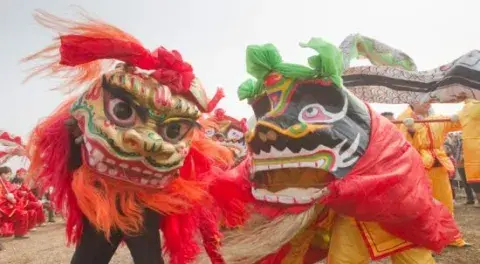
"Zombie Lion" dance & dragon parade during Chinese Lantern festival

D1 Drive to Huangpi- the country side from Wuhan downtown(appro 1.5hr), because it's sstill in the spring festival holiday ,  the event  will be start in the afternoon in some villages, but most of the village will do it after dinner. Drive back to Wuhan in the evening.


ONLY last for 4 days every year.
"Zombie Lion" activity
It was a lively and bustling scene with loud fire crackers, fireworks
sparkling in the sky, and crowds of people watching the Lion show with
music from drums and gongs. The "Zombie Lion", a local custom that
originated from the Tang dynasty (618-917), is played nightly from 1-2
days before to 1-2 days after the lantern festival. It is a very
mysterious activity of sacrifice. The "roler" [I cannot find this word
in the dictionary. Maybe you can define it in the text.], the person
who takes on the role of the sacrificed, performs the ritual ceremony
at the altar table, where he smells the smoke of the incense and burns
the yellow sign paper. Then he enters a trance and goes into a crazy
state. Despite the chilly winter weather, the "rolers" are usually
naked from the waist up while they dance misty-eyed under the lion's
coat. The "rolers" will visit every family, and the family will set
fireworks and firecrackers to welcome them. Usually it's the header's
home [I am confused. The rolers visit only the header's home or visit
every family's home?]. The "header" is the person who arranges this
activity. The header is selected in turn each year from among the
possible headers of which there are currently 8. This village of 140
households is named Peng jia gang or Peng's family because everyone
here has the surname Peng. We interviewed a 59-year-old roler who
started when he was in his 20s. It is said that this role is not
arranged by the people but by the heavens. But how do people know who
will be a roler? A potential roler is one who is normally a strong
man, but who has trouble eating and sleeping during the New Year
holidays. After playing the lion he will be normal again. It is
claimed that there was a roler who recovered even though the hospital
told his family that his condition was incurable. Although these
stories are based on superstition, the tradition remains year after
year. However, this tradition is slowly disappearing because the
younger generation no longer believe the stories, so they are
unwilling to continue the traditions.