Valley of the Temples
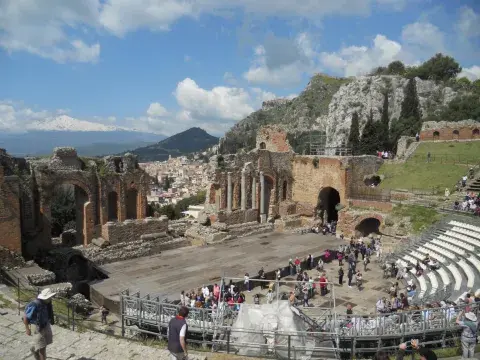
Long time ago, Sicily was possessed by the Greeks. They built there numerous temples which today contribute to tourism. Valley of the temples is located near Agrigento. It is sort of archaeological park with eight temples built about 500 years BC.
These eight temples are as follows:...
Long time ago, Sicily was possessed by the Greeks. They built there numerous temples which today contribute to tourism. Valley of the temples is located near Agrigento. It is sort of archaeological park with eight temples built about 500 years BC.
These eight temples are as follows: the Temple of Hera, the Temple of Concordia, the Temple of Heracles, the Temple of Olympian Zeus, the Temple of Castor and Pollux, the Temple of Hephaestos, the Temple of Demeter, and the Temple of Asclepius.
The Temple of Hera is also called the Temple of Juno. It contains many of its original pillars even though some were restored afterwards.
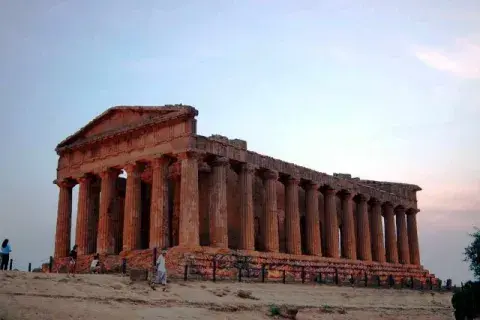
The Tempe of Concord enters in the competition of the most preserved temples of this kind in the world. It is a Doric temple. It was built by the Carthaginians. Later on it was converted into a church. There is also a legend that says that a wedding couple who visit this temple on their wedding day will have a peaceful life.
The Temple of Heracles or the Temple of Hercules is called so by modern people even though that there exist no evidence of its original name. It is the second largest temple in the valley. It got its name for the statue of Heracles.
The Temple of Olympian Zeus (Tempio di Giove Olimpico) was once the most famous and largest temple on Sicily. It was completed in the 5th century BC.
The Temple of Castor and Pollux (Tempio dei Dioscuri. Castor and Pollux were the twin brothers, sons of Leda and Zaus (Jupiter) and the temple is dedicated to them.
Saint Dominic Church
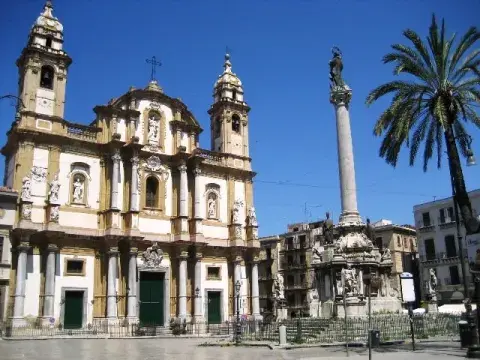
If we were to choose churches by importance this church one would surely be the second after the Palermo cathedral. It was firs erected in the 15th century but then was completely reconstructed in the mid 17th century so it can even be considered as if it dates back to the period of its latest re...
If we were to choose churches by importance this church one would surely be the second after the Palermo cathedral. It was firs erected in the 15th century but then was completely reconstructed in the mid 17th century so it can even be considered as if it dates back to the period of its latest reconstruction.
It is built in the barocco style. The front façade is marked by two bell towers.
The principal altar is built in marble. The church preserves some manuscripts and tombs of some notable people like the blessed Pietro Geremia, who was a Dominican writer from Palermo.
The interior of the church is nicely decorated, there are several chapels like the chapel dedicated to Mary (Cappella della Madonna), chapel of Saint Tommaso D´Aquino, chapel of Saint Joseph (Cappella di San Giuseppe), chapel os Saint Anna, chapel dedicated to Saint Domenico, to Vicenzo Ferrer…
In all these chapels one can see various works of art and spend an entire day looking at all the details.

Pretoria Fountain
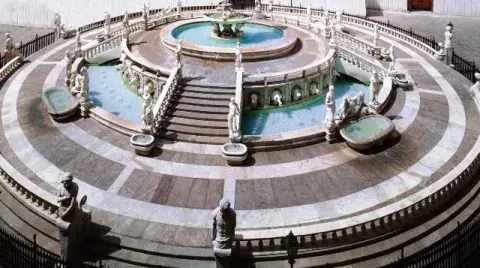
Fontana Pretoria is a large fountain built by Francesco Camilliani in the mid 16th century. One interesting fact about this fountain is that it wasn´t actually built in Palermo but in Florence and later on transported to Palermo on Pretoria Square. It was intended to be a private fountain i...
Fontana Pretoria is a large fountain built by Francesco Camilliani in the mid 16th century. One interesting fact about this fountain is that it wasn´t actually built in Palermo but in Florence and later on transported to Palermo on Pretoria Square. It was intended to be a private fountain in the Florentine park but was transferred because of exhibition causes and it stayed there until the present day.
The fountain isn´t the only beautiful thing on this square. There are also two churches around it; Church of Saint Catherina and Saint Joseph.
This fountain is richly decorated. One can see all kinds of decorations when walking around it. There are various gods and goddesses, animal heads, monsters, etc.
Due to some nude figures on the fountain, the residents of Palermo weren´t as satisfied with the fountain and it was even called the fountain of shame. It was like the representation of the corruption of people in the city. Even the entire square was, for some period of time, called the Square of Shame.
The fountain was restored about 10 years ago.