Tour Description
Pick up from your hotel lobby at 9:00am. Transfer to Tiananmen square by car (about driving 10 minutes), tour arround Tiananmen square(40 minutes), the square can hold about one million people for public celebration or gatherings. On the west of Tiananmen Square it is the Great Hall of the People, the meeting place of national people's congress of the People's Republic of China. Then visit to Forbidden city(2 hours), the largest and best-preserved ancient imperial palaces group with 500 years history. The palace was built between 1406 and 1420, but was burnt down, rebuilt, sacked and renovated countless times, so most of the architecture you can see today dates from the 1700's and onwards.
Tiananmen square:
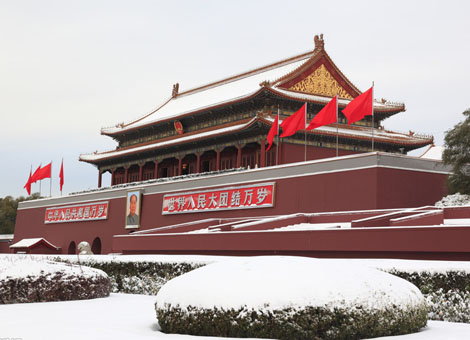
Tiananmen Square -The biggest downtown Square of the world,where you can visit Tiananmen Tower, Monument to the People's Heroes, Great Hall of the People, Mao Zedong Memorial Hall and see the national flag raising ceremony. Thousands of people come to the Square every day. It is the must place to visit in Beijing City.
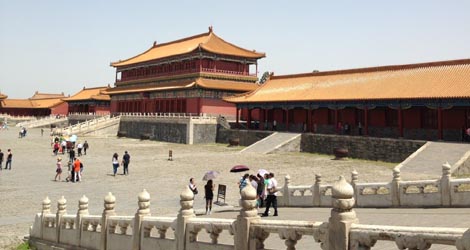
Forbidden city:
The Forbidden City was the Chinese imperial palace from the Ming Dynasty to the end of the Qing Dynasty. It is located in the middle of Beijing, China, and now houses the Palace Museum. For almost 500 years, it served as the home of emperors and their households, as well as the ceremonial and political center of Chinese government.
Lunch at a special characteristic restaurant(1.5 hours).
In the afternoon transfer to hutong walk and Lama temple(2 hours) for sightseeing . Transfer back to your hotel.
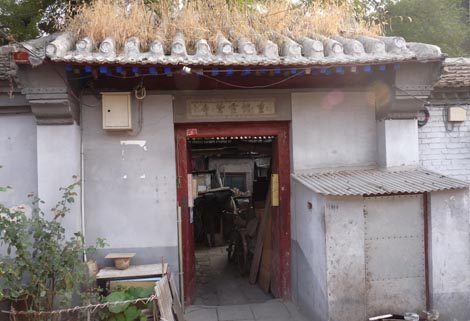
Hutong:
From hutongs, one can discover how Beijingers, in the course of centuries, advanced from vulgarity to refinement. In numerous hutongs are scattered residences of famous personnel, and these places are repositories.
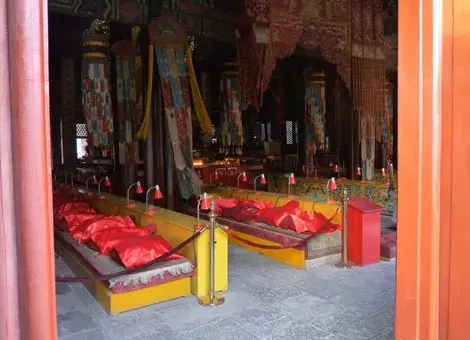
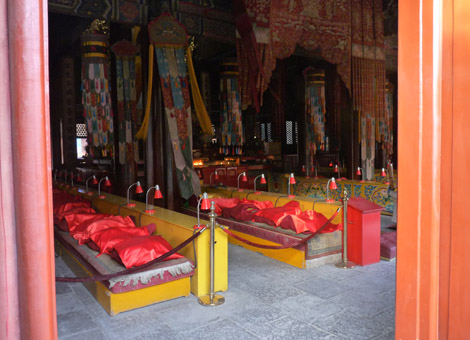
Lama Temple:
Lama Temple (Yonghe Temple; Yonghe Lamasery) is the largest and best-preserved lamasery in Beijing. It was built in 1694 during the Qing Dynasty (1644-1911) as the residence of the Emperor Yongzheng (the third emperor of the Qing Dynasty) before he ascended the throne. In the year 1744, the residence was completely converted into a lamasery. So this resplendent architectural complex is endowed with the style of an imperial palace, making it distinctive from others.
Attractions Visited in This Tour


