Tour Description
Day 01 Arrival at Beijing
On arrival in Beijing, you will be met by our tour guide and transferred to your hotel in Beijing. Free for the rest of the day.
Day 02 Beijing ( B L )--- Tiananmen Square, Forbidden City, Treasure Houses, Jingshan
After breakfast at your hotel, start your tour with the visit to Tiananmen Square(40minutes), the largest public square in the world. Then move on to the Forbidden City(2hours), the Chinese imperial palace from the mid-Ming Dynasty to the end of the Qing Dynasty.
Tiananmen Square:
Tiananmen Square -The biggest downtown Square of the world,where you can visit Tiananmen Tower, Monument to the People's Heroes, Great Hall of the People, Mao Zedong Memorial Hall and see the national flag raising ceremony. Thousands of people come to the Square every day. It is the must place to visit in Beijing City.
Forbidden City:
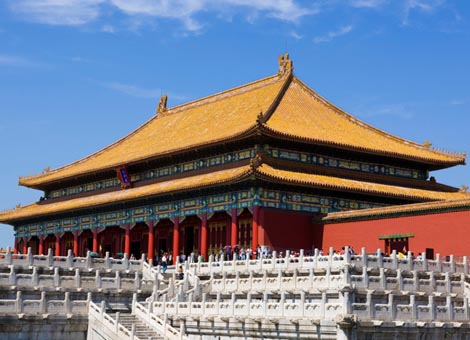
The Forbidden City was the Chinese imperial palace from the Ming Dynasty to the end of the Qing Dynasty. It is located in the middle of Beijing, China, and now houses the Palace Museum. For almost 500 years, it served as the home of emperors and their households, as well as the ceremonial and political center of Chinese government.
Lunch at a characteristic restaurant(1.5 hours).
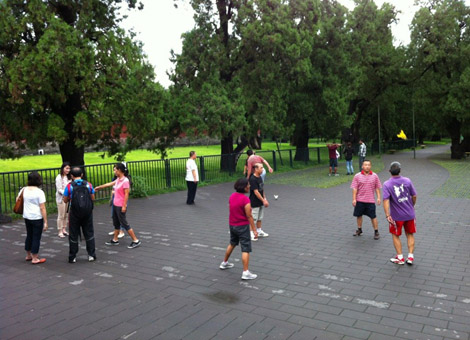
Then move on to Jingshan Park(1hour),which is an artificial hill in Beijing, China. Covering an area of more than 230,000 m², Jingshan is immediately north of the Forbidden City on the central axis of Beijing. As a result, it is administratively part of both the Xicheng District and the Dongcheng District. Originally an imperial garden, it is now a public park, known as Jingshan Park. These five peaks also draws the approximate historical axis of central Beijing.Jingshan is especially a popular place for elderly people socializing and gathering. One can often find elderly folks dancing, singing opera and doing other cultural activities, such as kuai ban, at Jingshan.
Jingshan Park:
Jingshan Park was a part of the Forbidden City until the early 1900's when the walls were pulled down and a road cut through it destroying several gates and buildings between the park and the rear entrance of the palace. The hill in Jingshan Park was made with the earth removed to create the palace moat. It is well worth the climb on a clear day for spectacular views of the Forbidden City and Beijing.
Day 03 Beijing ( B L )-- Mutianyu Great Wall, Dingling, Olympic Green, outside look the Bird's Nest and Water Cube
Morning excursion to the most beautiful section of the Great Wall - the Mutianyu Great Wall. The hike takes about 2-3 hours.
Mutianyu Great Wall:
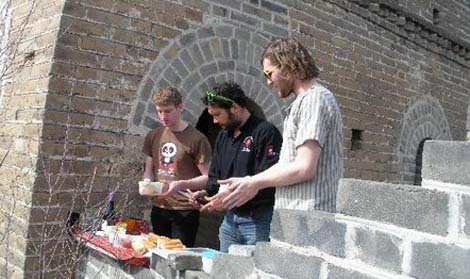
Mutianyu is a bit more rugged and slightly less crowded than the more famous Badaling. There are abundant natural springs which feed a great variety of plants and trees. Over 96% of Mutianyu is covered by trees and orchards, keeping the air fragrant with chestnut blossoms in the spring and fresh all year long.
Lunch at a characteristic restaurant(1.5 hours).
After lunch at Chinese Restaurant, continue to visit Dingling(1.5hours), one of the 13 Ming Tombs of the 13 emperors of the Ming Dynasty ( 1368 - 1644). Then head to the Olympic Green to have an outside look at the Bird's Nest and Water Cube(1hour). Back to your hotel.
Dingling:
Dingling (Ding Tomb) is the only one excavated in this graveyard up till now. Zhu Yijun, the thirteenth emperor of the Ming Dynasty was inhumed together with his two empresses. Constructed between 1584 and 1590, this mausoleum used to have bridges, a stele pavilion, halls and towers and annexes on the ground. Hundreds of years later, only a stone tower, Bright Tower, survives following several fires. Behind the tower is the underground palace, 27 meters (88.6 feet) in depth. Visitors may enter via a tunnel. The stone palace occupies an area of 1,195 square meters (0.3 acre) and has five halls. Gates of the main halls are made of white marble, with fine thrones in the central hall, coffins and burial chests at the rear hall. Some precious articles excavated are on exhibition like crowns, ornaments, and utensils.
Olympic Park:
The Olympic Green, Beijing's newest urban parkland, is great for walking and sightseeing-it's full of Olympic-themed sculptures, art and fun rest spots. To get to the Bird's Nest, walk north on Beichen Lu, and soon you'll see it on your right with the Water Cube on your left. The Bird's Nest-officially known as Beijing National Stadium-is easily the most iconic of Beijing's Olympic structures.
Day 04 Beijing ( B L )--- Summer Palace with boating, Beijing Zoo
After breakfast, start your morning tour with the visit to the Summer Palace(2hours), originally a royal garden and a temporary dwelling palace for emperors of Qing Dynasty. And take a boat ride on the beautiful Kunming lake.
Summer Palace:
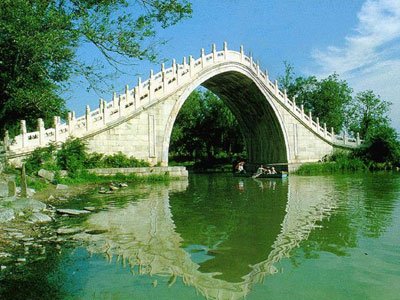
The Summer Palace has three main sections including the political active region, living section and visiting area. The serious and imperatorial Renshou Hall is the representative of the political area in Summer Palace.The palace features hundreds of architecturally distinct buildings, halls, pavilions, pagodas, bridges and corridors dispersed among magnificent and elegant gardens.
Lunch at a characteristic restaurant(1.5 hours).
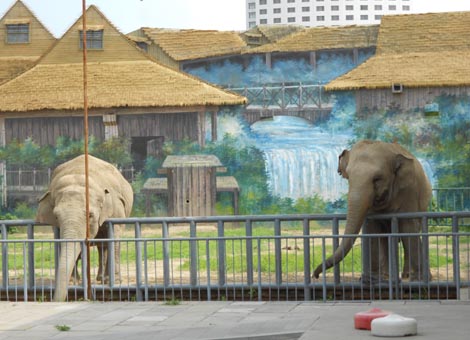
Then move on to Beijing zoo(2hours), which is one of the oldest zoos in China and has one of the largest animal collections in the country.
Beijing zoo:
The zoo and its aquarium has over 450 species of land animals and over 500 species of marine animals. In all, it is home to 14,500 animals. More than six million visitors come to the zoo each year. The zoo was founded in 1906 during the late Qing Dynasty. Like many of Beijing's parks, the zoo's grounds resemble classical Chinese gardens, with flower beds amidst natural scenery, including dense groves of trees, stretches of meadows, small streams and rivers, lotus pools and hills dotted with pavilions and historical buildings. Be transferred back to your hotel after the whole day tour.
Day 05 Beijing ( B L )-- Temple of heaven, Confucian temple, Hutong, learn the Art of paper cutting
Visit the Temple of heaven(1.5hours), the place where the emperors of Ming and Qing Dynasties worshipped heaven and prayed for peace and harvest. Then proceed to Confucian temple(1.5hours).
Temple of heaven:
The Temple of Heaven was the place where the emperors of the Ming and Qing dynasties worshipped heaven and prayed for good harvests. They came here twice a year, on the 15th day of the 1st lunar month and on Winter Solstice. At first, both heaven and earth were worshipped here. Following the construction of the Temple of Earth in 1530 in the north of Beijing, only heaven was worshipped in this temple. The temple is considered a Taoist temple, although Chinese heaven worship predates Taoism.
Confucian temple:
The Confucius Temple preserved the world famous Jinshi(the title of successful candidate who passed through the highest imperial examination) nomination monument, the handwritings of Gongche (the title of successful candidate who passed through the imperial examination) and other celebrities' handwriting works. You can find the familiar names like Liu Yong, Ji Xiaolan and etc there. It also exhibits the vast Thirteen Inscriptions Monuments. They are excellent writing and engravings and brilliant articles. And it is the sole completed Thirteen Inscriptions Monuments in China. The ten stone drums imitated in Qian Long Period of Qing Dynasty and Han Yu's stone drums and song monument are also a series of treasure cultural relics that is preserved in good condition and has the clear handwriting on it. In the sacrifice main palace, it exhibits the sacrifice vessels and music instrument in accordance with its original arrangement.
Lunch at a characteristic restaurant(1.5 hours).
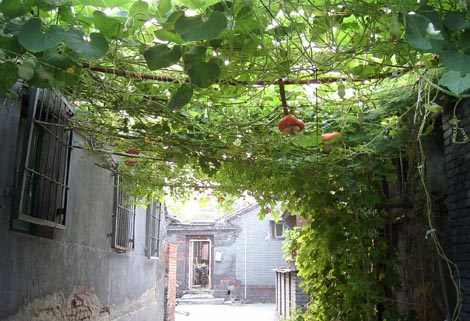
Then we visit Hutong(2hours), from hutongs, one can discover how Beijingers, in the course of centuries, advanced from vulgarity to refinement.
Hutong:
Many famous operas and dramas are based on the themes of the "hutong life". When urban construction threatens the existence of these hutongs, some Beijingers become worried. We trust that a "must see" hutong tour will greatly help you know more about Beijing history and culture.Then learn the Art of paper cutting.
Learn the Art of paper cutting:
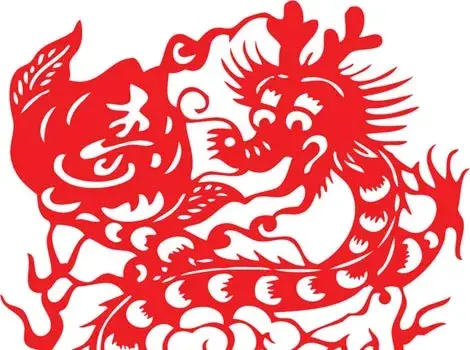
Paper cutting is a folk art that involves creating intricate designs out of paper using scissors or a blade. It is a traditional craft found in numerous cultures that is still enjoyed today as an art form. There are numerous ways to learn paper cutting, as paper cutting is a versatile and fun art that only requires paper, a blade and a steady hand to get started.
Day 06 Beijing--- Exit or free on your own ( B )
After breakfast, transfer to beijing airport for departure or free activity on your own.
Attractions Visited in This Tour