Tour Description
Day 01 Arrival at Beijing
English speaking tour guide and driver will meet you at airport or railway station and transfer you to hotel, the rest of the day is free at your own leisure.
Day 02 Beijing ( B L )--- Tian'anmen Square, Forbidden City, Niujie Mosque, temple of Heaven
Pick up from hotel, drive to Tian'anmen Square(40minutes), a 44-hectares square, Discover with your tour guide the 72-hectares Forbidden City. It will take 2-3 hours to visit the square and the Forbidden City.
Tiananmen square:
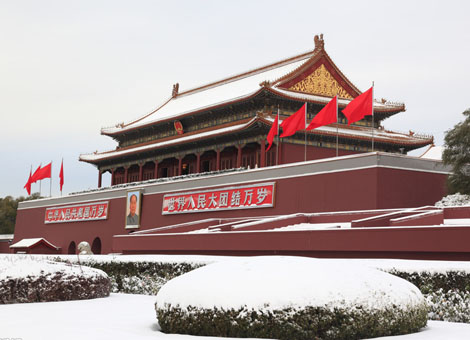
Tiananmen Square -The biggest downtown Square of the world,where you can visit Tiananmen Tower, Monument to the People's Heroes, Great Hall of the People, Mao Zedong Memorial Hall and see the national flag raising ceremony. Thousands of people come to the Square every day. It is the must place to visit in Beijing City.
Forbidden city:
The Forbidden City was the Chinese imperial palace from the Ming Dynasty to the end of the Qing Dynasty. It is located in the middle of Beijing, China, and now houses the Palace Museum. For almost 500 years, it served as the home of emperors and their households, as well as the ceremonial and political center of Chinese government.
Lunch in the muslim restaurant.
In the afternoon, visit the Temple of Heaven(1.5hours). Visit the Niujie Mosque(1hour), The Mosque is located in Beijing's Xuanwu District, the spiritual centre for the 10,000 Muslims living in the vicinity and it is the biggest and oldest one in Beijing. Niujie in Xuanwu District, where the mosque is located, is the largest area inhabited by Muslims in Beijing. After the tour, drive back to the hotel.
Temple of heaven:
The Temple of Heaven in the southern part of Beijing is China's largest existing complex of ancient sacrificial buildings. The Temple of Heaven is situated in the southern part of Beijing, about 6 Km away from the center of the city. Traditionally, this temple was for imperial use only. It was built in 1420, covering an area of 273 hectares, it is the one of the largest parks in Beijing.
Niujie Mosque:
The Mosque is located in Beijing's Xuanwu District, the spiritual centre for the 10,000 Muslims living in the vicinity and it is the biggest and oldest one in Beijing. Niujie in Xuanwu District, where the mosque is located, is the largest area inhabited by Muslims in Beijing.
Day 03 Beijing ( B L )--- Badaling Great Wall, Ming Tombs, view the exterior of Bird's Nest Stadium and Water Cube
Picked up from your hotel, first stop would be The Great Wall at Badaling or Mutianyu(2hours), 80km away from the city. After hiking at the Great Wall, have a rest and lunch will be Chinese food.
Badaling Great Wall:
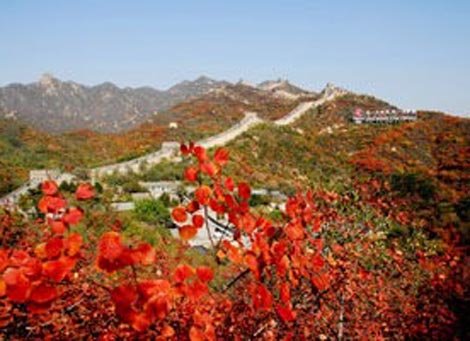
Badaling Great Wall, a most famous section of the Great Wall, is located at Yanqing County in Beijing. Longqing Gorge sits at Yanqing County as well as Badaling Great Wall, so Longqing Gorge also attracts large number of tourists after Badaling Great Wall. Badaling, literally meaning "reach eight directions", got its name because the maze of its ridges stretches in all directions.
Lunch at a characteristic restaurant(1.5 hours).
Visit The Ming Tombs(1.5hours) in the Afternoon, on the way go back to the hotel, you will view the exterior of Bird's Nest Stadium and Water Cube Aquatic Centre(1hour), two famous buildings during Olympic games in 2008.
Ming Tombs :
The Ming Tombs lie in Changping County, about 50 kilometers (31 miles) northwest from the urban area of Beijing. It is actually a tomb cluster of the Ming Dynasty (1368-1644), including thirteen emperor's mausoleums, seven tombs for concubines and one grave for eunuchs. This cemetery is world famous because of the thirteen emperors buried here. Sitting at the foot of Mt. Yan and occupying an area of more than 120 square kilometers (29,653 acres), it appears extremely spectacular.
Olympic Green:
The Olympic Green, Beijing's newest urban parkland, is great for walking and sightseeing-t's full of Olympic-themed sculptures, art and fun rest spots. To get to the Bird's Nest, walk north on Beichen Lu, and soon you'll see it on your right with the Water Cube on your left.The Bird's Nest-officially known as Beijing National Stadium-is easily the most iconic of Beijing's Olympic structures.
Day 04 Beijing ( B L )---Summer Palace, Huashi Mosque, National Grand Theatre
After breakfast, we proceed the Summer Palace(2hours), originally a royal garden and a temporary dwelling palace for emperors of Qing Dynasty. Visit to the Huashi Mosque(1hour).
Summer Palace:
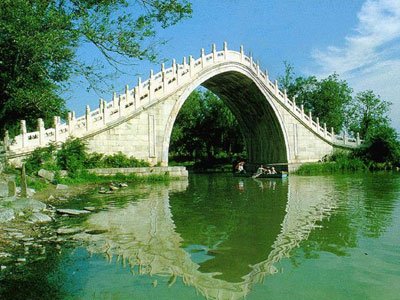
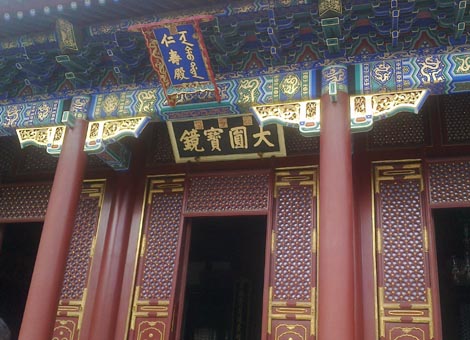
Summer Palace is the largest imperial garden of Ming and Qing dynasty. The whole Summer Palace covers an area of over 290 hectares including more than 3,000 buildings, such as halls, pavilions, towers, etc.
Huashi Mosque:
The Huashi Mosque is one of the famous mosques in Beijing City. It has a long history, and is located on the southern side of the Huashi Street in Chongwen District. It was first built in the early years of the Ming Dynasty (1368-1644), and underwent several repairs and expansions. It was first built in 1415 during the reign of the emperor YongLe in Ming Dynasty. It has a long history of more than 500 years.
Lunch at a characteristic restaurant(1.5 hours).
We continue our tour to National Grand Theatre(1.5hours) , or The National Centre for the Performing Arts (NCPA), is one of the 4 most important landmarks in Beijing. It was designed by French architect Paul Andreu. Construction started in December 2001 and the inaugural concert was held in December 2007.
National Grand Theatre:
In the past three years, NCPA adheres to operational positioning for high-quality and high-standard refined art and excellent national art, organizes and plans for a total of 16 performance seasons / weeks and 5,274 shows, including 2,213 public-benefit performances and 3,061 commercial performances. 119,000 artists from 481 worldwide performance organs demonstrate their skills on the stage of NCPA.
Day 05 Beijing ( B L )--- Hutongs
Breakfast in hotel, head to the Shichahai Area - the old part of Beijing. One-hour tour of a 300-year old courtyard. With the help of your English speaking tour guide, the housekeeper of the yard gives you a detailed explanation of the old courtyard ( Siheyuan ) - its history, its layout, its Fengshui, and its traditiona Chinese culture involved. Then take a pedicab and ride through the zigzag and narrow alleys or hutongs. Two people share one rickshaw. Drop off at the Silver Ingot Bridge( Yinding Bridge ) and walk along the 800-year old Yandai Xiejie ( Tobacco Pipe Lean Street ), and get to the Drum Tower. Ascending the 67-meter high and two-story Drum Tower dating from 1420 is sure to bring you back to the old Beijing by seeing the big drum tower and having bird's eye view of the surrounding communities of hutongs and siheyuan - existing traditional courtyards in Beijing. Then transfer to airport for departure.
Hutong:
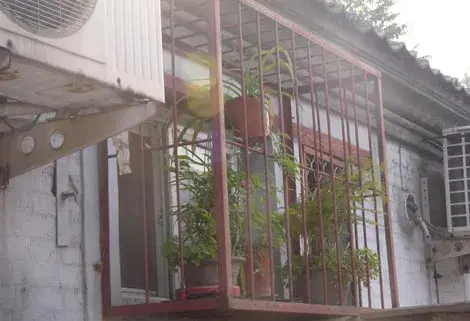
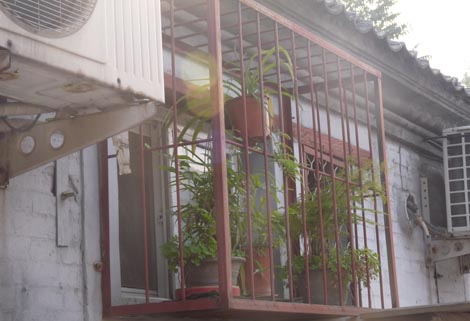
Hutong has become a general name for all the lanes and streets in Beijing. Recent record shows that there are over 6,000 hutongs. The ancient hutong area takes up most of the urban district where one third of the people living in the urban area reside. The residents there retain their old way of life and deem hutongs as an indispensable part of Beijing culture.
Attractions Visited in This Tour