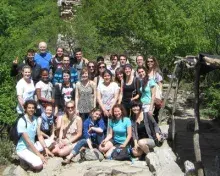
A discussion between my guest and me after the trip
发件人:carmen bossé<>
发送日期:2013年7月7日 8:53
收件人:[email protected]<>;
主 题:A little question and a big thank you!
Hi Amanda,
I am presently working on my essay for Jonathan's class and I have a little question for you. First I would like to thank you for the most wonderful week of my life. You gave so much precious information, time and energy that made the trip incredible. I wish i was still in Beijing. I loved every other part of the trip but I must say that Beijing is my favourite.
I'm not sure about the changes Mao brought to the hulongs and equivalents. Before during the different dynasties, the people were the owners of their own land. Then when Mao was in power, he took possession of the lands. What happened then to their homes? they had to pay rent to the government? and if they couldnt pay, then what did they do? how did it change the structure of the cities.
I hope you understand my question and it wont be hard for you to answer.
Thank you for your help.
Carmen
the red haired girl ;)
Date: Mon, 8 Jul 2013 15:27:44 +0800
From: [email protected]
To: carmen.bosse
Subject: 回复:A little question and a big thank you!
Hey Carmen!!!!!
I'm very happy receiving your mail, and thanks for your very nice words :D
About your question, according to what I learned, which might not be very acurate as I didn't do any research on the system of Mao's time but just catch things occasionally, there were 2 different systems define citizens and peasants.
Generally everything should belong to the state but practically sliced down to state owned administration units.
In the city, everyone no matter minister or worker were suppose to be equal: working for the country,get payment from the government, enjoy welfare from the government including place to live, tickets for food and other daily necessaries, free education(though dropped soon while Culture revolution started)and arranged work after graduate, etc. Seems like they've been took away freedom to choose but replaced by so called equality.However citizens only occupy 20% of the population at that time.
I think your question is about how they live the places assigned by the government(or practically the government administration they were working at) if they don't have money to pay the renting( which is symbolically the management and the maintenance fee). First, it is very small(just a few rmb); second it might have already been charged out of the payment every month.
It is more like a welfare the citizens enjoys at the time to have assigned to live compare with the other 80% peasants.
The majority of farming land were sliced down to certain village units (which is the smallest government unit) and each village has a public field which all the villagers work together and the harvest would belong to the government(and the villagers would be paid according to the scores they got working on this public field, sometimes too small that they need to bare starving). Government gave no welfare at all to the peasants(free education though) but a small piece of private land which the villagers could use to grow some food and build their own houses.At the beginning when no free market were allowed, people could either eat what they grow or exchange with government administration for tickets which people use in the cities for some cloth or other comparatively fancier stuffs at the time. So families with more boys could live a much better life and those leak of labor would suffer poverty.
There was a big gap between citizen and peasants, which is far from equality, not mention people were labeled in accordance with the parents' career before the founding of PRC, and the rest were grand with responsibility and power to educate those family members with discrimination, in schools and at work.
Well, might be too much and random hah, don't know if I had answered your question, welcome to feedback any time!
Please bring my regards to others as well :)
Cheers,
Amanda