Tour Description
Tour Description
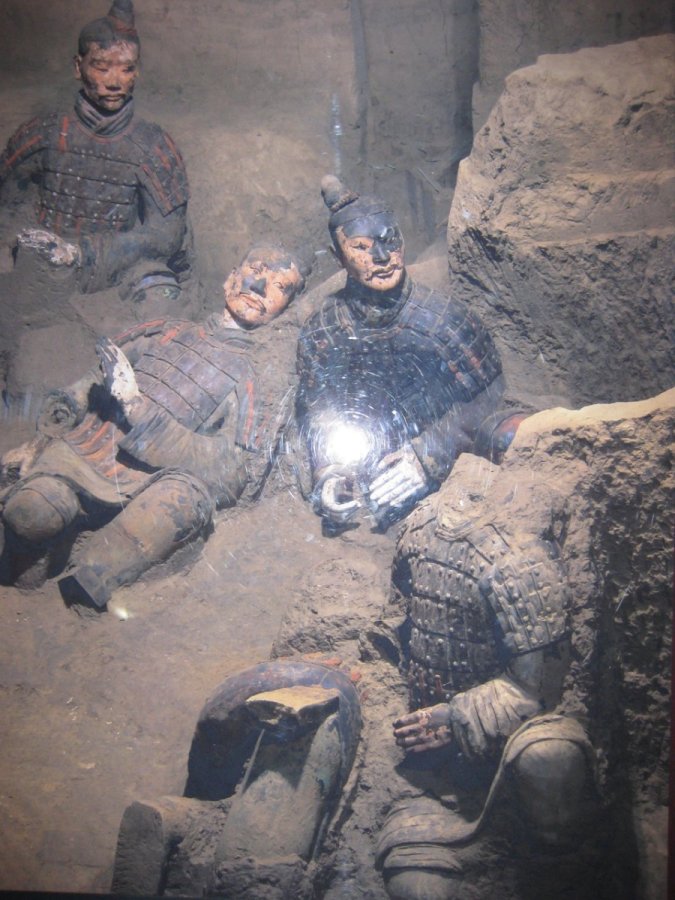
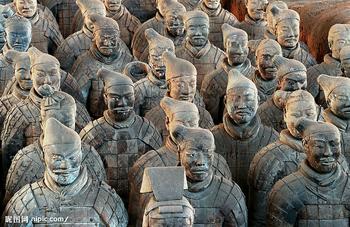
- The Terracotta Army or the "Terra Cotta Warriors and Horses", is a collection of terracotta sculptures depicting the armies of Qin Shi Huang, the first Emperor of China. It is a form of funerary art buried with the emperor in 210–209 BC and whose purpose was to protect the emperor in his afterlife. The figures, dating from around the late third century BC,[1] were discovered in 1974 by some local farmers in Lintong District, Xi'an, Shaanxi province. The figures vary in height according to their roles, with the tallest being the generals. The figures include warriors, chariots and horses. Current estimates are that in the three pits containing the Terracotta Army there were over 8,000 soldiers, 130 chariots with 520 horses and 150 cavalry horses, the majority of which are still buried in the pits near by Qin Shi Huang's mausoleum.[2] Other terracotta non-military figures were also found in other pits and they include officials, acrobats, strongmen and musicians
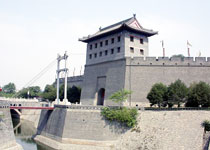
- The fortifications of Xi'an (Chinese: 西安城墙)is an ancient capital of China, represent one of the oldest and best preserved Chinese city walls. Construction of the first city wall of Chang'an began in 194 BCE and lasted for four years. That wall measured 25.7 kilometres (16.0 mi) in length, 12–16 metres (39–52 ft) in thickness at the base. The area within the wall was c. 36 square kilometres (14 sq mi). The existing wall was started by the Ming Dynasty in 1370. It encircles a much smaller city of 14 square kilometres (5.4 sq mi). The wall measures 13.7 kilometres (8.5 mi) in circumference, 12 metres (39 ft) in height, and 15–18 metres (49–59 ft) in thickness at the base
-
The tour service standard&Conditions:
A.Friendly English speaking chauffeur&guide service/Minimum 2 pax in the tour
B.Private New clean Van with big space and good air con/Admission fee of listed attractions included
C:Pickup and dropoff at downtown area - No shopping Visiting in the tour
Attractions Visited in This Tour