China National Museum-The Four-Goat Square Sacrificial Vessel(Zun).
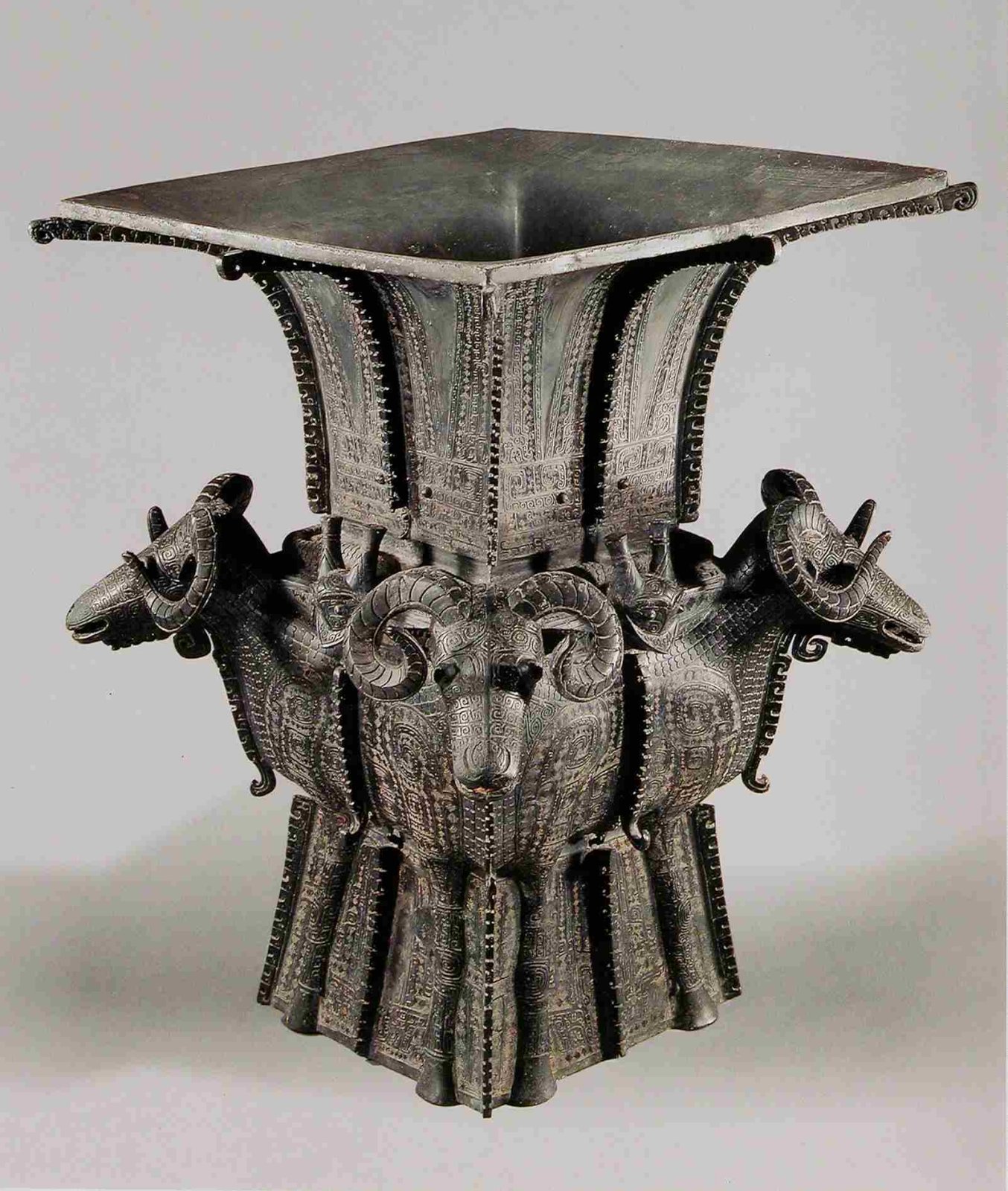
The Four-Goat Square Sacrificial Vessel(Zun). 四羊方尊
It is a ritual vessel that has history of 3000 years.
In the remote past, the Shang Dynasty used it to pray for good luck. Among the 10 National treasures, it occupies the third place. In order to protect it, the government has banned its trips to foreign countries. It is The Four-goat Square Sacrificial Vessel..
Today I will share the ancient story of the Four-goat Square Zun. This is not a commonly liquor vessel, in the height of 58.3 centimeters, with the weight of 34.5 kilograms. It is used to offer sacrifices to gods or ancestors, It is also the largest square bronze untensil among all existing Shang Dynasty bronze objects. Today the Four-goat Square Zun can be rank third among the ten great national treasures. It is closely related to its casting process.
In accordance with the analysis of archeologists, The Four-goat square Zun was forged by twice forging technique: firstly the horns and heads were forged separately, they were placed in the planned position for an integrated forging. But it was perfectly integrated, reflecting the excellent forging techniques, therefor it is regard the ultimate model of bronze ware. More than that, the Four-goat Square Zun represents the sheep totem. It is an important reason for its priceless, what is all about? Goat was one of earliest hunted and domestic animals meanwhile, the species was widely and commonly raised across China. Therefore, goat had a long relationship with mankind.
Lamb had the tradition to kneel to suck its mother’s milk which was considered a model for kindness and filial piety. Even later generation took it a role model of filial piety. Not only for that, sheep are often associated with auspicious words of kindness.
The Four-Goat Square Zun is priceless, because it is confirmed as early as in the Shang Dynasty, sheep have become an important totem culture. Early in the Shang Dynasty 3000 years ago, ancient people carried out rites with it. After 3000 year the treasure is finally woke up, unearthed in 1938, one day of April in Huangcai village of Hunan Province, three yang men were cultivating the land, suddenly their hoes meet something strong, and the sound clear voice, and thus make 3 guys attention, they started to dig it out, though never been touched antiques before, they believed this object must be a treasure and took it back home. At home 3 boys kept knocking and tapping until they broke one piece of it, then they parceled it and put into the box, soon after, everybody in the village knows it, even the antique shop in the city which the boss paid 400 Yuan bought it, at that poverty time, poor family with 3 boys, the only incomes is their father’s part time working hour’s pay and of handed –made beancurd done by grandfather’s pay, it has been said enough money for support family, though they wanted to keep it , they have to sell it . By selling treasure must through the process via the leader of village and security manager, that is why they only get 240 Yuan left. For many years after the war happened in China, the unearthed bronze ware not been oxygenized by air, still keeping its golden color, the inscription carved on it is clearly seen. It uses its unique manner to tell an ancient story.