Tour Description
is a valley located in Beheira Governorate, Egypt, including a town with the same name. The name refers to the presence of eight different lakes in the region that produce natron salt.
In Christian literature is one of the three early Christian monastic centers located in the desert of the northwestern
The alkali lakes of the Natron Valley provided the Ancient Egyptians with the sodium bicarbonate used in mummification and in Egyptian faience, and later by the Romans as a flux for glass making.
Saint Macarius of Egypt first came to Scetis (Wadi El Natrun) around 330 AD where he established a solitary monastic site.[4] His reputation attracted a loose band of anchorites, hermits and monks who settled nearby in individual cells. Many of them came from nearby Nitria and Kellia where they had previous experience in solitary desert living; thus the earliest cenobitic communities were a loose a consolidation of like-minded monks.[2] By the end of the fourth century, four distinct communities had developed: Baramus, Macarius, Bishoi and John Kolobos. At first these communities were groupings of cells centered on a communal church and facilities, but enclosed walls and watchtowers developed over time and in response to raids from desert nomads.[2] Nitria, Kellia, and Scellis also experienced internal fractures related to doctrinal disputes in Egypt.[2] The monasteries flourished during the Muslim conquest of Egypt (639-42), but in the eighth and ninth centuries taxation and administration concerns led to conflicts with the Muslim government.[2] Nitria and Kellia were eventually abandoned in the 7th and 9th centuries respectively, but Scetis continued throughout the Medieval period.[2] Although some of the individual monasteries were eventually abandoned or destroyed, four have remained in use to the present day
I will meet you in your hotel. You will
drive by a modern air-conditioned vehicle to Wadi
El-Natrun, the actual birthplace for Christian
monasticism. Basically, there were about 50
monasteries, only 3 have survived into modern
times. Begin your trip with Deir al-Baramus which
is the oldest of the surviving 3 monasteries, and in
many ways the most isolated, then proceeds to Deir
Anba Bishoi whose body is still in the monastery.
You will end your trip with Deir El-Suryani which is
the smallest and most compact of the 3 monasteries.
Highlights:
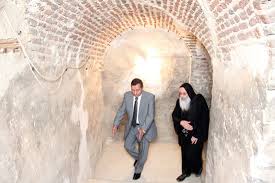
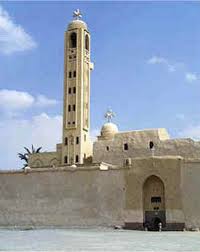
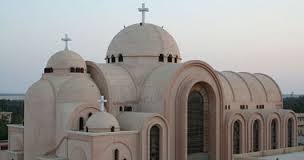
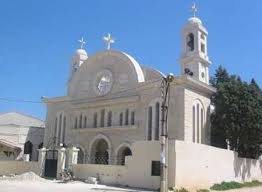
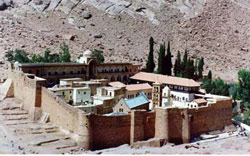
* Monestaries at Wadi El Natroun
* ANBA BISHOY moastery, Wadi el Natrun
* Kloster bei Wadi El Natrun
* Wadi El-Natrun
Includes • All transfers by a Private air-conditioned vehicle
• Private English Egyptologist guide
• Entrance fees to all the mentioned sites
• All Service charges & taxes