

The history of Forbidden City - 1
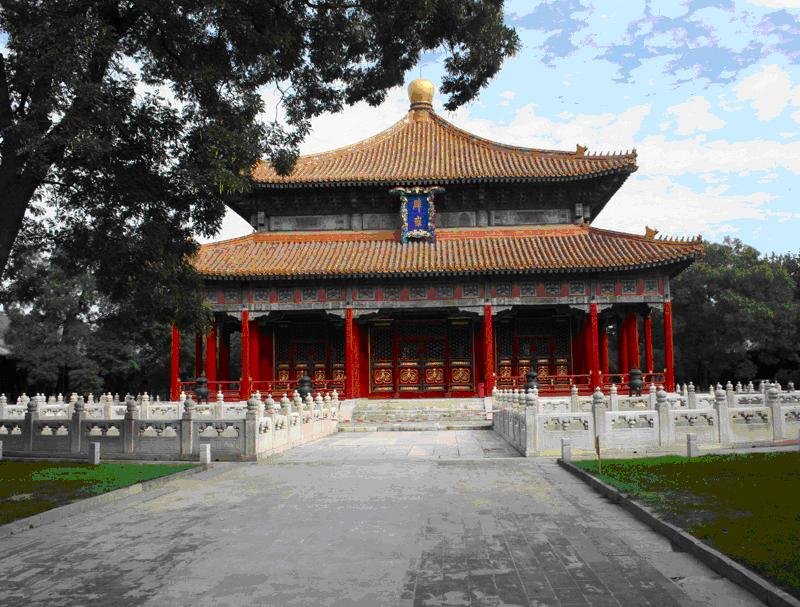
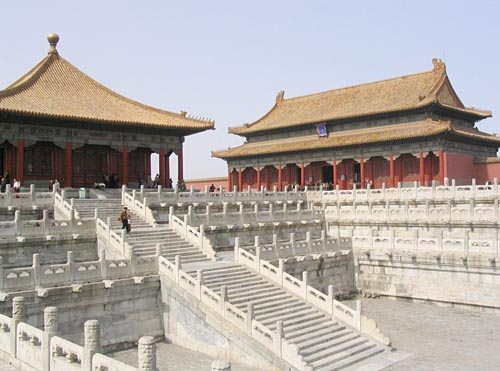
The Palace Museum ,known as the Forbidden City, was the home to 24 Ming and Qing emperors, off-limits for 500 years. It stands in the center of Beijing ,covering 720,000 m2 ,owning 800 buildings and 9999 rooms, constituting a priceless testimony to Chinese civilization during the Ming and Qing Dynasties.
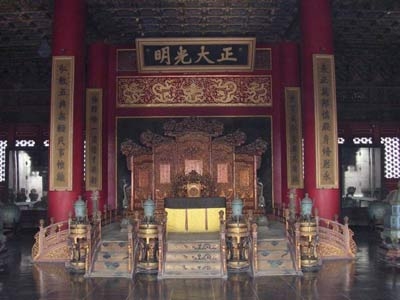
The Forbidden City is one of the architectural wonders of the world. The construction took 14 years and was finished in 1420. The former Palace’s outer court with its halls of Supreme, Central and Preserved Harmony and side buildings ,was where the emperor palaces handled the state affairs and held grand ceremonies. The 3 main and 6 eastern and western palaces form the inner court, where the emperor dealt with daily government affairs, and where the imperial family lived. The last dynasty fell in 1911, but Emperor Puyi still lived in the inner court .In 1925, it was converted into a museum and opened to the public. In 1987, the Palace was inscribed on the UNESCO[the United Nations Educational Scientific and Cultural Organization] World Cultural Heritage List.
The history of Forbidden City - 2
As is famous in Chinese history, the emperor always had many concubines. Besides his wife, the highest ranks of concubines were: Guifei(second to the empress), and Bin(3rd to the empress). Not all the concubines had the chance to sleep with the emperor. Some even had not one chance at all. But all of those women were not allowed to marry others.
The emperor had so many concubines and maids, so he was afraid that some might have affairs woth the male servants. For this reason, the eunuch appeared to serve the emperor, the empress and the concubines.
Opening Time
8:30 a.m.- 5:00 p.m., last admission at 4:00 p.m. in summer and 3:50 p.m. in winter.
Admission Fee:
Busy season (4.16-10.15): 60 yuan/person
Off-season (10.16-4.15): 40 yuan/person
(Selective charge at Treasure House:10 yuan/person )
Qin Shihuang's Tomb
30 kms east of the City of Xi’an, there is the Mausoleum of Qin Shihuang, a tomb 700,000 wokmen spent 36 years to complete. The tomb-as yet unexcavated-has naturally aroused considerable excitement in archaeological circles.
An enormous number of terracotta warriors were accidently discovered by Chinese peasants while digging a well several kms away from the tomb. They found the emperor was guarded by these warriors for his protection in the ancient burial site. The figures ,as tall as humans and all different, with their horses, chariots and weapons, are masterpieces of realism and also hold great historical interest. No doubt thousands of statues still remain to be unearthed on this archaeological site.
Pit #1 ,the largest ,contains mainly infantry. Nearly 1,000 of an estimated 6,000 figures of armored and unarmored infantrymen ,bowmen, crossbowmen, archers, and charioteers have been unearthed.
Pit #2 is smaller, with a more complex layout of military personnel divided into 4 units of archers, chariots and cavalrymen, approximately 1,000 soldiers, 40 horses and 80 chariots in all.
Pit #3 is partially excavated and open to the public.
The Mausoleum of Qin Shihuang as inscribed on the UNESCO World Heritage Site List in 1987.
How to get there and get around
Xi’an is extremely well connected by air, with international, and domestic flights operating to many cities. After arriving in Xi’an, you can take buses or cars to the Mausoleum.
Buses are plentiful but unfortunately tend to be overcrowded .So the best option for journeys of any distance is to travel by taxi.
You can also rent a car, or a minibus, or even a bicycle. The price will be reasonable.
You need bargain when buying something there.
You need bargain when buying something there.
How to Get There:
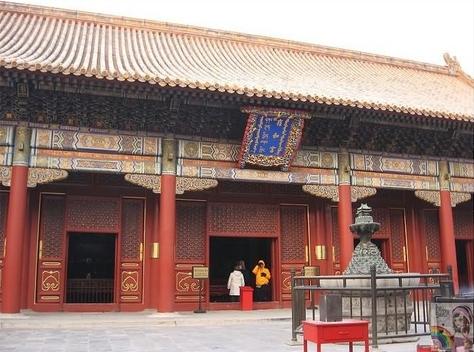
Metro: Yong He Gong/Lama Temple (215, exit C)
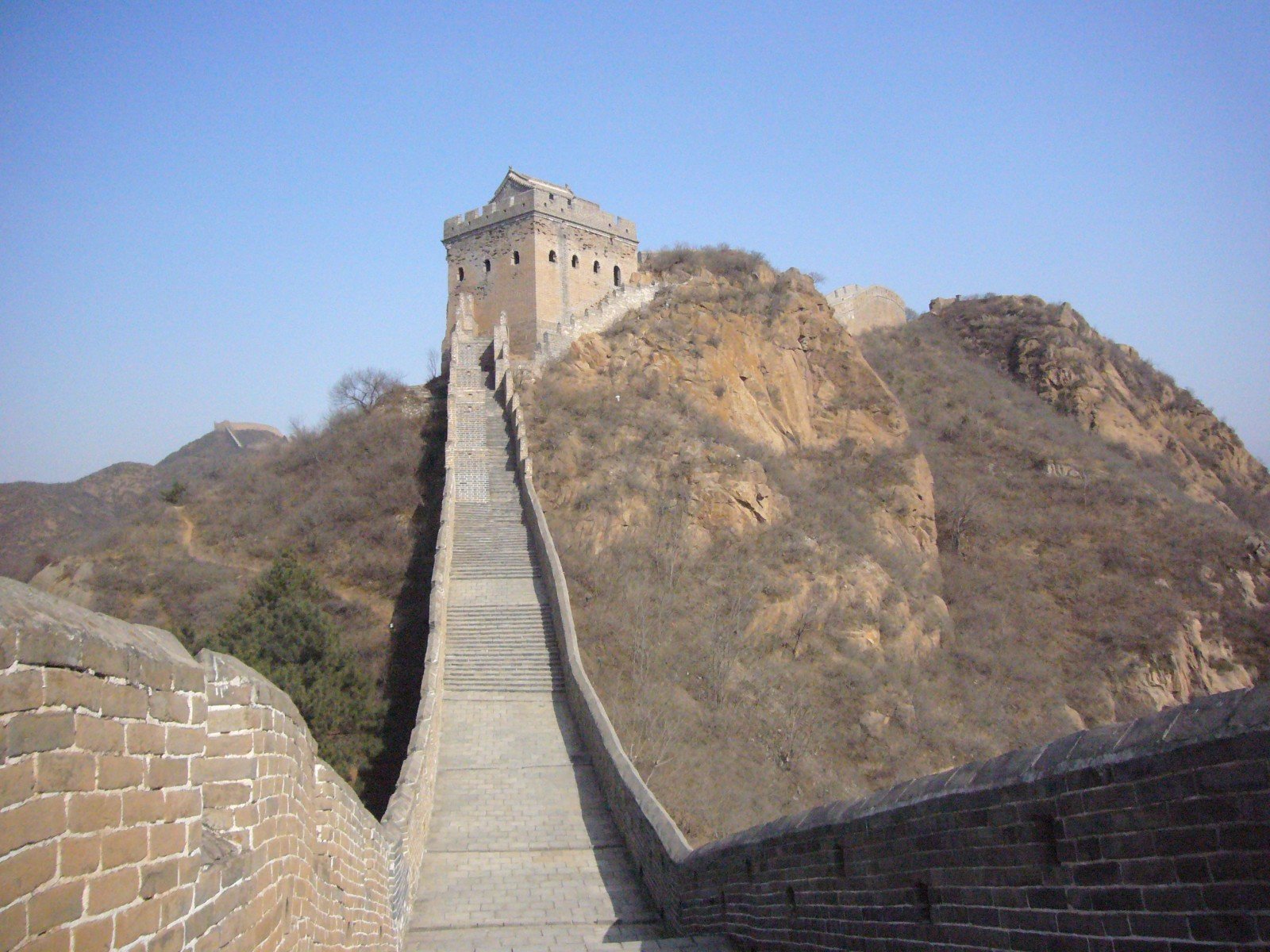
The history of Great Wall - 2
These high walls laid the foundation for the present Great Wall. In Chinese history, this is the largest project carried out in 3 dynasties that brought the climax of the development of the Great Wall. Large-scale construction of the Great Wall was concentrated in the Qin, Han and Ming dynasties. U wanna hear the story? Let me tell you~
The sections of the wall began to be called the Great Wall in the time of Qin Shihuang, the First Emperor of the Qin Dynasty.
It was in 221 B.C., when Qin conquered the other states and unified China, Emperor Qin Shihuang, who paid more attention to military affairs, ordered the connection of these individual walls and further extensions to ward off harassment by the Huns-an ancient nationality in northern China, and for the use of further defensive projects. Then, he sent Meng Tian, a military general, with 300 and thousand soldiers and 1 million civilian[1 fifth of China's population at that time] up to north to build up the Great Wall. When the linking work finished 10 years later, the total length of the Great Wall was 7,000 kilometers long over 5,000 kms long. This was the first 'climax of the development of the Great Wall
During the Han Dynasty, in order to ward off the Huns as well as to protect the newly opened Silk Road, they not only maintained and utilized the Qin Great Wall but also built an Outer Great Wall. They also had the Great Wall extended westwards to the Lop Nur Lake in today's Xinjiang. The Han Dynasty period became the second climax of construction on the Great Wall.